7 Best Industries That Benefit Most from Digital Printing

Time:2026-11-20 Author:Ethan
0%

Digital printing has changed how businesses produce labels, signs, books, and promotional materials. It can make short runs practical and allow designs to change without replacing an entire printing setup. That flexibility matters when a café updates its seasonal menu or a retailer needs a small batch of location-specific posters. Small runs, less waste.

What industries benefit most from digital printing? The strongest fit often appears where companies need customization, quick revisions, or frequent updates. Packaging and retail brands can test new artwork; publishers can print niche titles in smaller quantities; healthcare providers can prepare clear, tailored patient materials. Education, hospitality, and event businesses also use printed pieces that change with classes, menus, or schedules. Results still depend on the job.

Digital printing is not automatically the best choice for every project. Very large, repeat orders may call for a different production method, and paper, ink, finishing, and color requirements can affect both cost and quality. A vivid sample on screen may not match the finished piece exactly. Check proofs. The right decision starts with the actual run size, material, deadline, and intended use—not a broad promise about speed or savings. This guide examines seven industries where digital printing can offer practical advantages, while noting the details buyers should confirm before placing an order.
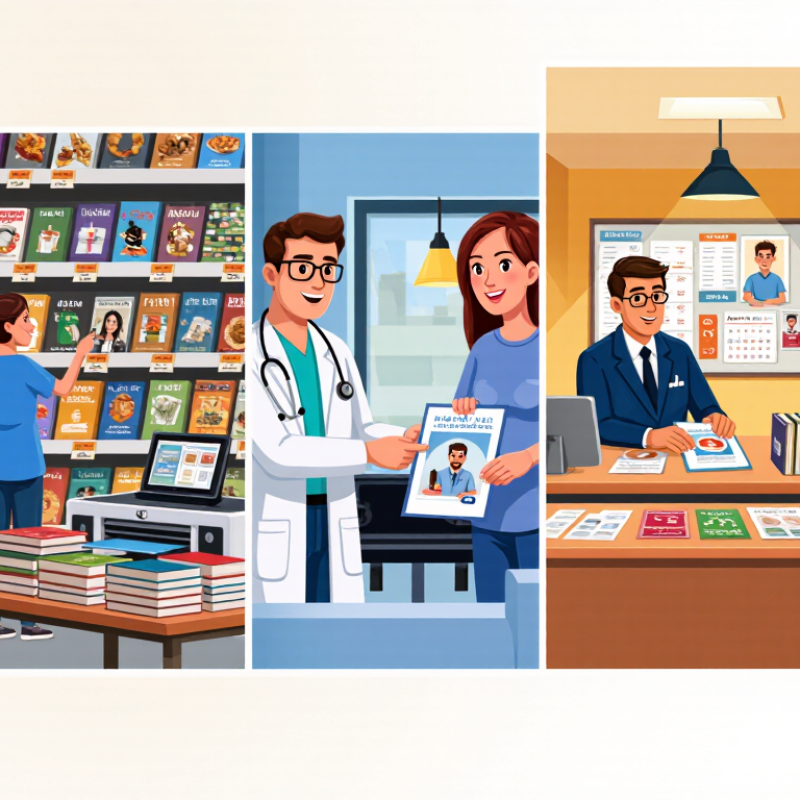
7 Best Industries That Benefit Most from Digital Printing

Digital Printing: Core Processes and Industry Applications

Digital printing transfers artwork directly from a digital file to a chosen surface, without making a traditional printing plate. Two common processes are inkjet and electrophotography. Inkjet systems place tiny drops of ink onto paper, film, or fabric; electrophotographic systems use toner, heat, and pressure to form the image. Each process handles materials differently. A coated label stock may accept ink cleanly, while an uncoated paper can absorb it and soften fine details.

Before a run, operators prepare the file, check color settings, and match the press profile to the material. Small runs matter. Variable data lets each package or mail piece carry a different name, code, or image. This suits product labels, short-run packaging, event signs, and personalized books.

Textile printing can also produce short batches, though fabric pretreatment and curing affect wash durability. Color still shifts. A rushed proof can mislead, especially when the final material reflects light differently from a monitor. Shops often test a sample, inspect small text and solid areas, then adjust ink limits or finishing settings. That extra check takes time, but it can prevent a visible mismatch across a whole batch.

Key Benefits Driving the Adoption of Digital Printing

Digital printing helps industries respond to changing demand without committing to large inventories. A packaging team can test a seasonal label in a short run, then revise the artwork before a wider release. A clothing printer can produce limited designs without storing piles of unsold stock. Less setup is needed. Shorter runs become practical, and personalized details—such as names, regional language, or changing product information—can be added from one file.

Speed matters, but so does control. Teams can review a digital proof, correct a date or color, and send an updated file without preparing new printing plates. This can reduce delays and material waste, especially for publishers, retailers, and event producers working with tight schedules. It is not a perfect fit. Color may vary across materials, and very large orders can cost more per item than traditional methods. Files also need careful checking; a fast press can reproduce a mistake just as quickly. The real benefit is flexibility, though that flexibility still requires good planning.

Publishing, Packaging, and Retail

Publishing, packaging, and retail benefit when print jobs need flexibility rather than huge quantities. In publishing, digital printing supports short runs of books, catalogs, and training materials. Publishers can gauge demand before ordering more copies, reducing leftover stock. Variable data also allows selected pages or covers to be personalized. Small details matter: a readable type size and sturdy binding can make a book feel more considered.

Packaging teams can update labels and cartons without committing to large batches of one design. This helps when product information changes or seasonal artwork is introduced. Retailers can print shelf signs, window graphics, and local promotions close to the date they are needed. A neighborhood store might change a weekend offer overnight. Still, quick production is not automatically better; color may shift between materials, and rushed proofing can miss errors.

Tips: Check a physical proof for color, text, and trim before approving a run. Match the paper or package material to its use, especially where items will be handled often. Keep one approved sample for comparison. It is easy to overlook this step, and that can be costly.

Healthcare, Education, and Fashion

Healthcare providers use digital printing for appointment cards, patient guides, room signs, and short-run educational materials. Content can be updated quickly when instructions change, reducing the need to store outdated stock. Clear type, strong contrast, and durable paper help materials stay readable in busy clinics. Privacy still matters: printed documents should not expose personal information in public areas. Digital printing offers flexibility, but it does not guarantee accuracy. A final proofread is essential.

Schools can print class worksheets, event posters, and learning cards in quantities that match enrollment. Teachers can revise dates or lesson details without ordering a large batch. Fashion teams use the same flexibility for lookbooks, fabric sampling, hangtags, and limited product inserts. Color tests matter. A shade on screen may look different on fabric or paper, so samples should be checked under realistic lighting. Small details matter. Digital printing can also create waste when files, materials, or quantities are poorly planned.

Tips: Confirm names, dates, and sizes before printing. Request a physical sample for color-sensitive work. Choose stock suited to handling and storage, and order only what you can use. A little planning saves reprints.

7 Best Industries That Benefit Most from Digital Printing - Healthcare, Education, and Fashion
Industry Common Digital Printing Uses Key Benefits Practical Considerations
Healthcare Patient information sheets, forms, labels, appointment materials, and short-run educational leaflets. Supports on-demand production, quick content updates, and printing in quantities suited to changing needs. Printed patient materials should be accurate, legible, accessible, and handled in line with applicable privacy and safety procedures.
Education Course packs, worksheets, workbooks, classroom posters, event materials, and customized learning resources. Enables short print runs, revised editions, and materials tailored to different courses or groups of learners. Use readable layouts and suitable paper; accessible versions may also be needed for learners with visual or other disabilities.
Fashion and Apparel Garment graphics, fabric designs, labels, lookbooks, hangtags, and small-batch promotional materials. Facilitates design variations, sampling, and limited runs without requiring the same setup as many conventional print processes. Textile results depend on fabric composition, ink or transfer method, and required wash or wear performance; test materials before production.
Packaging Short-run cartons, product sleeves, labels, prototypes, and packaging with variable text or graphics. Can make smaller batches and frequent design changes practical, including versions for different products or markets. Food-contact packaging and other regulated uses require appropriate materials and compliance with relevant local requirements.
Retail and Marketing Posters, banners, point-of-sale signs, direct-mail pieces, flyers, and location-specific promotional materials. Supports personalized or localized content and helps produce campaign materials in quantities matched to demand. Choose substrates and finishes suited to the display environment, such as indoor use, outdoor exposure, or frequent handling.
Publishing Books, manuals, catalogs, reports, and other short-run or made-to-order publications. Allows titles to be printed in smaller quantities and updated editions to be produced without holding large inventories. Check image resolution, color consistency, binding options, and paper choice against the publication’s intended use.
Manufacturing and Industrial Equipment labels, operating instructions, safety signs, diagrams, product inserts, and prototype graphics. Helps produce clear, job-specific documentation and labels in quantities suited to production runs or equipment changes. Labels and signs must remain legible and durable under the actual conditions of use; verify material and print resistance requirements.

Marketing and Promotional Products

Marketing teams use digital printing to turn everyday objects into visible reminders. A small event can have 200 tote bags, each printed with a local map or attendee-specific details. Short runs and variable-data printing make those tailored campaigns practical without ordering thousands of identical items. Color matching still needs care; a vivid screen design may look muted on fabric.

The Advertising Specialty Institute’s 2023 Ad Impressions Study found that 85% of consumers remember the advertiser on a promotional product. It also reported that 83% are more likely to do business with an advertiser after receiving one. Those figures support using useful items, not simply adding a logo to whatever is cheapest. A sturdy notebook on a conference table may earn repeated attention. A flimsy giveaway may not.

Digital printing also helps teams test different messages across neighborhoods, events, or customer groups. That flexibility matters when a campaign changes quickly. A useful caveat: impressions do not guarantee sales. Teams should track scans, inquiries, or redemption activity alongside distribution, then adjust the next print run. Even a well-designed item can miss its audience.

FAQS

What is digital printing?

It transfers artwork from a digital file directly onto a surface, without a traditional plate. Paper, film, and fabric are common choices.

Which digital printing processes are commonly used?

Inkjet places tiny ink drops on material. Electrophotography uses toner, heat, and pressure. Different surfaces behave differently.

Why does the printing material matter?

Coated label stock can hold crisp ink, while uncoated paper may absorb it and soften fine details. The difference can be subtle.

How does variable data help?

It changes names, codes, or images across individual pieces. A mailing run can carry a different name on each envelope.

What kinds of jobs suit digital printing?

Short-run books, labels, event signs, packaging, and retail graphics are practical examples. Smaller batches can reduce leftover stock.

How should color be checked before a print run?

Review a physical proof against the final material. Monitors can mislead. It takes a little extra time, but it is worth checking.

What should operators inspect before production?

Check file settings, the press profile, small text, solid areas, and trim. Keep one approved sample nearby.

Does textile printing last through washing?

Durability depends on fabric pretreatment and curing. A test wash can reveal problems, though one sample may not predict every result.

Conclusion

Digital printing is transforming how businesses produce and personalize materials, using processes that transfer digital files directly onto a range of surfaces. Its flexibility, quick turnaround, and ability to create short, customized runs make it a practical choice for many sectors. This overview explores what industries benefit most from digital printing and why adoption continues to grow, including reduced setup needs, efficient production, and the ability to update designs with ease.

Publishing, packaging, and retail use digital printing for books, product labels, packaging, and in-store materials. Healthcare and education benefit from clear, tailored informational resources, while fashion uses it to create distinctive designs on fabrics. Marketing teams and makers of promotional products can also produce targeted campaigns and personalized items without large print runs. Together, these applications show how digital printing supports both everyday production and creative experimentation across diverse industries.

Ethan

Ethan

Ethan is a seasoned marketing professional with a deep expertise in our company's innovative product line. With a passion for sharing knowledge and insights, he takes the lead in regularly updating our corporate blog, where he explores industry trends, product features, and effective marketing......