Printing automation is no longer limited to high-speed presses or large factories. Today, it can connect prepress checks, job scheduling, color control, finishing, and dispatch. For buyers, the central question is practical: which tools solve a real production bottleneck? A camera-based inspection system may catch a color shift before hundreds of sheets are wasted. A digital workflow can reduce manual job entry, while automated material handling can keep heavy paper stacks moving safely. These gains depend on sensible integration, not just new equipment.
This guide explores how automation is changing printing production lines, from workflow software and robotics to predictive maintenance and data monitoring. It also considers the trade-offs behind each trend. A machine may run faster, yet create delays if operators lack training or finishing equipment cannot keep pace. Small details matter: file compatibility, setup time, service access, and clear alerts when a job needs human review. Ask suppliers for demonstrations using your own job types, and check how performance will be measured after installation. Be cautious of broad promises; results vary by shop, workload, and process discipline. Automation is not a cure-all. Even well-designed systems can expose weak handoffs or unreliable data. Buyers should compare total operating needs, not only headline speed, and involve press operators in evaluation. Their feedback can reveal awkward controls or maintenance steps that a brochure misses. The right investment should make production more predictable while leaving people able to intervene when print quality or deadlines are at risk.
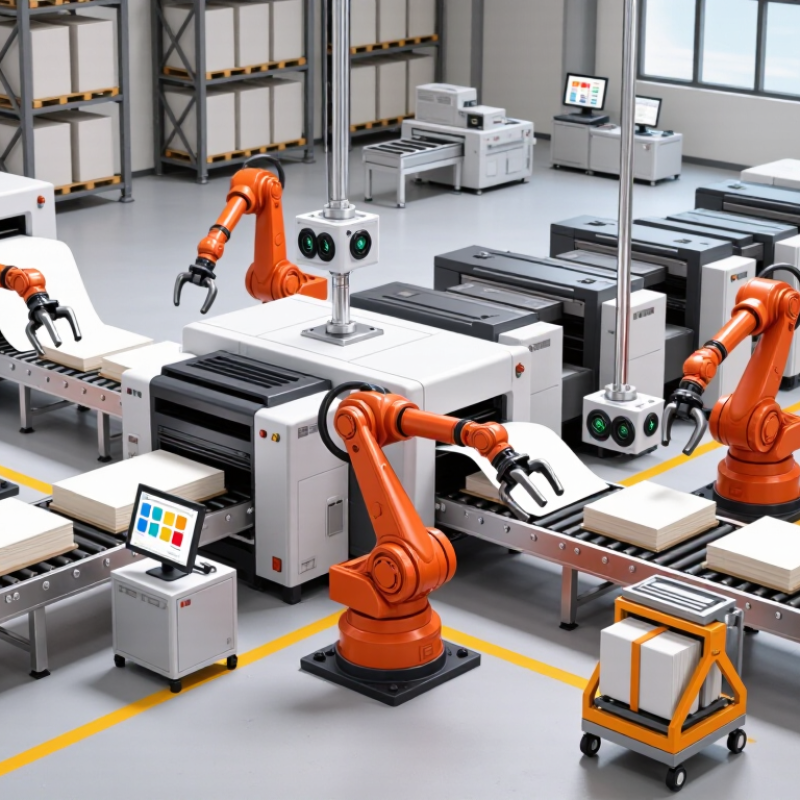
China Top 10 Printing Automation Trends for Buyers
In China’s printing industry, automation means coordinating work from file preparation to finished sheets, not simply installing faster equipment. A print job may pass through preflight checks, plate or digital imaging, press setup, inspection, and finishing. Connected scheduling systems can reduce repeated data entry and show operators which jobs are waiting. On a busy production floor, that might mean fewer paper tickets and clearer instructions beside each press.
Automation also changes how buyers assess a printing operation. Look for consistent color records, traceable job data, and practical links between prepress, production, and finishing. A sensor can flag a feeder problem, but it cannot fix poor maintenance or unclear procedures. That part is often overlooked. Smaller plants may gain more from standardizing job information than from buying a fully connected line. Results depend on staff training, material variation, and the quality of existing workflows. The honest caveat: automation can expose messy processes before it improves them. A careful buyer should ask how exceptions are handled, not just how quickly a routine job runs.
Printing automation connects prepress, production, finishing, quality control, and job administration through software, equipment, and shared production data. The trends below describe buyer-relevant capabilities and practical ways to evaluate them; they do not represent market-share or adoption estimates.
| No. | Automation trend | What it means in practice | Useful data or KPI to check | Buyer evaluation point |
|---|---|---|---|---|
| 1 | Connected workflow and production data | Job details move between estimating, prepress, press, finishing, and job tracking with less manual re-entry. JDF/JMF are established formats and messaging specifications used for exchanging print-job and production information. | Share of jobs transferred without re-keying; number of manual handoffs; completeness of job-status reporting. | Ask which systems and data formats can be integrated, how exceptions are handled, and whether job data can be exported. |
| 2 | Automated prepress and file preparation | Software can apply repeatable checks and tasks such as preflight, imposition, trapping, and proof routing before a job reaches production. | Preflight failure rate; time from file receipt to production-ready approval; number of manual corrections per job. | Test with representative customer files, including files with missing fonts, low-resolution images, or incorrect page sizes. |
| 3 | Digital printing for short runs and variable jobs | Digital production can avoid plate-making steps and is often suited to short runs, frequent version changes, and personalized content. The economical run length depends on the job and total finishing costs. | Cost per saleable copy at different run lengths; setup time; changeover time; waste during setup. | Compare like-for-like job samples and include finishing, consumables, service, and reprint costs in the calculation. |
| 4 | Automated color control and press setup | Measurement and preset systems can help standardize color checks and transfer production settings between jobs. Results still depend on calibration, materials, and operating conditions. | Time to reach approved color; number of press-side adjustments; measured color variation against an agreed reference. | Define the measurement method, reference condition, substrate, and acceptance tolerance before comparing equipment. |
| 5 | Inline inspection and defect detection | Camera-based inspection can identify visible print defects during production, allowing operators to investigate issues sooner than with end-of-run checks alone. | Defects detected per job; false-reject rate; time between defect occurrence and operator response. | Ask for a trial using the buyer’s actual artwork, substrate, print speed, and typical defect examples. |
| 6 | Automated finishing and job changeovers | Programmable finishing equipment can store job settings and automate repeatable operations such as cutting, folding, binding, or packaging setup. | Changeover minutes; setup waste; jobs completed per shift; rework rate after finishing. | Check compatibility with the shop’s job mix, formats, tolerances, and upstream job-ticket data. |
| 7 | Robotics and material handling | Robotic or automated handling can move paper, printed sheets, pallets, or finished goods between defined production stages. It is most effective where workflows and safety arrangements are suitable. | Manual handling steps removed; transfer time; equipment utilization; stoppages caused by material flow. | Assess floor layout, load types, access routes, guarding, operator training, and recovery procedures for interruptions. |
| 8 | Production monitoring and predictive maintenance | Equipment data and maintenance records can help teams track operating conditions, identify recurring stoppages, and plan service before or after a failure, depending on the system’s capabilities. | Unplanned downtime; mean time between stoppages; maintenance response time; recurring fault categories. | Confirm which machine data are available, who can access them, and whether alerts are actionable for the maintenance team. |
| 9 | Energy, material, and waste monitoring | Metering and production records can make energy use, paper consumption, setup waste, and rejected output more visible by job or production stage. | Energy per production unit; paper waste per job; spoilage rate; amount of rework and rejected output. | Agree on measurement boundaries and units, and compare jobs with similar substrates, formats, and production requirements. |
| 10 | Secure, interoperable shop-floor connectivity | Connected presses, workflow systems, and business software need reliable data exchange as well as controlled user access, network security, and clear responsibility for updates. | Integration exceptions; access-control coverage; backup and recovery test results; time to restore production data. | Review network architecture, user permissions, data ownership, backup practices, and support arrangements before connecting production systems. |
Buyer note: The KPIs listed are evaluation measures, not claimed industry averages. Establish a baseline with comparable jobs before calculating expected savings or return on investment.
Connected prepress, automated job routing, machine vision, robotics, and predictive maintenance are key technologies. Job data can move from order entry to press and finishing. Fewer handoffs matter.
No. The global digital print market was estimated at $167.5 billion in 2022, with a forecast of $230.5 billion by 2032. That is market growth, not an automation forecast or a guaranteed return for each plant.
Cameras can detect registration drift, missing text, and color variation as sheets move through the line. Some systems can correct repeatable faults. Poorly maintained sensors may cause false rejects.
Request a live test using your own files and materials. Measure setup time, registration accuracy, stoppages, rejected sheets, and output quality. A polished demo can hide awkward changeovers.
Confirm connections with prepress, presses, finishing equipment, and production software. Older machines may need gateways, operator training, and staged testing. It is not plug-and-play.
Robotic loading, palletizing, and roll handling can reduce repetitive lifting. Check safety features, training, and recovery steps. A robot will not fix inconsistent job records.
Compare measured changeover times, waste rates, uptime, and rework from similar jobs. Include installation, training, consumables, and downtime in total cost. Not just the purchase price.
Get maintenance intervals in writing and confirm local parts availability. Ask who diagnoses remote faults and how quickly an engineer can visit. I would double-check this before signing.
China’s printing industry is moving from labor-intensive workflows toward connected, data-guided production. Printing automation combines software, sensors, robotics, and machine controls to coordinate tasks such as prepress preparation, material handling, press operation, finishing, and quality inspection. These capabilities help explain how automation is changing printing production lines: routine steps can be synchronized, production data can be monitored in real time, and adjustments can be made more consistently. Emerging trends include intelligent scheduling, automated color and quality checks, predictive maintenance, robotic handling, and greater integration between equipment and production-management systems.
For buyers, evaluating a Chinese printing automation solution means looking beyond headline speed. Consider compatibility with existing presses and workflows, the range of materials and jobs supported, reliability, training, maintenance, software integration, and the supplier’s ability to provide clear technical support. A practical selection process starts by identifying bottlenecks and measurable goals, then comparing suitable equipment, checking integration requirements, and planning installation in stages. Careful testing and staff training can help ensure automation delivers dependable improvements in throughput, consistency, and flexibility.

 Axis Print