The rise of digital printing has transformed the industry in recent years. As businesses seek efficient solutions, the question often arises: what are the advantages of digital printing over traditional methods? A report by Smithers Pira highlights that the digital printing market is expected to reach $29 billion by 2025, demonstrating its growing significance. Expert Mark R. Smith emphasizes, “Digital printing offers unmatched flexibility and faster turnaround times.”
Cost reduction is a major benefit. Traditional printing often requires expensive plates and setup costs, limiting small runs. Digital printing eliminates these barriers. A study by InfoTrends revealed that brands could save up to 30% on short-run projects with digital methods. Moreover, the environmental impact is lessened, as digital printing minimizes waste and energy consumption.
However, challenges remain. The quality of digital prints may not always match the richness of traditional processes for specific applications, such as high-end photography. Companies must assess their needs. Ultimately, understanding what are the advantages of digital printing over traditional methods will enable businesses to make informed decisions for their projects.
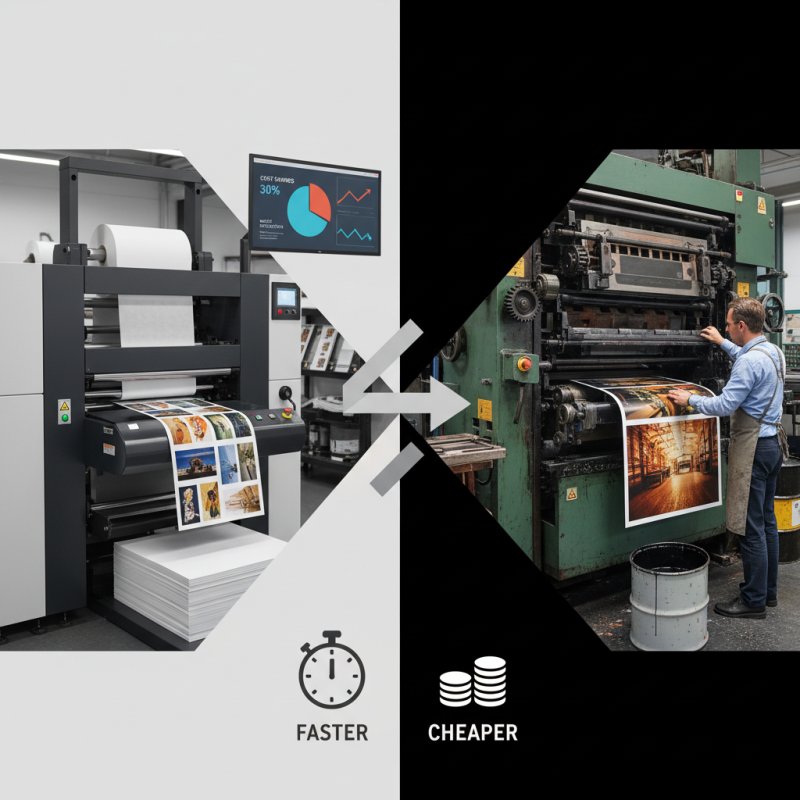
Overview of Digital Printing Technology
Digital printing technology represents a significant advancement in the printing industry. Unlike traditional methods, digital printing uses electronic files to produce images directly. This process allows for quicker turnaround times. Projects that once took days can now be completed in hours.
The technology behind digital printing relies on high-quality inkjet or laser printers. This enables precise color reproduction and sharp details. For instance, a small batch of books can be printed with individual customization. It opens doors for personalized marketing materials. However, not all projects benefit from this approach. For larger runs, traditional printing can often be more cost-effective.
Despite its advantages, digital printing comes with challenges. Equipment costs can be high, leading to a steep learning curve. As technology evolves rapidly, staying updated is crucial. Many businesses may struggle with maintaining consistency across projects. Overall, digital printing offers flexibility and speed. It remains essential to assess each printing scenario for the best results.
Cost Efficiency of Digital Printing vs. Traditional Methods
Digital printing offers significant cost advantages compared to traditional methods. It eliminates the need for expensive setup costs associated with printing plates. This feature is especially beneficial for small print runs. You can produce items like brochures or business cards without breaking the bank.
Another factor to consider is waste reduction. Digital printing allows for print-on-demand services. As a result, businesses create only what they need. This minimizes unsold inventory, which can lead to wasted materials and resources. The ability to customize prints further enhances cost efficiency.
However, digital printing may not be the best choice for every project. The initial equipment costs can still be high. Additionally, some users may find that digital prints do not match the tactile quality of traditional methods. It’s essential to evaluate each project’s specific needs. Balancing quality with cost is key in making an informed decision.
Speed and Flexibility in Digital Printing Processes
Digital printing has transformed the landscape of print technology. One of the standout benefits is its speed. Digital presses can produce high-quality prints much faster than traditional methods. This rapid turnaround is invaluable for businesses facing tight deadlines. With digital printing, you can see proofs almost instantaneously. This means that adjustments can be made on the fly, enhancing efficiency.
Flexibility is another crucial aspect of digital printing. Unlike traditional methods that often require lengthy setup times, digital processes allow for easier changes. This adaptability is beneficial for short runs or custom projects. Print jobs can be tailored to customer needs without excessive waste.
However, it's essential to reflect on the capability limits of digital printing. Certain complex designs may not always achieve the same vibrancy as offset prints. Moreover, understanding the nuances of materials is critical; not every substrate lends itself well to digital techniques. Balancing speed with quality requires careful consideration and ongoing adjustments.
Quality and Precision in Digital Printing Applications
Digital printing has transformed the way businesses and artists produce visual content. This method offers a level of quality and precision that traditional printing simply cannot match. According to a report by Smithers Pira, digital printing is expected to capture around 50% of the global print market by 2025, driven by its high-quality results.
One notable advantage is the ability to achieve vibrant colors and intricate details with ease. Digital printing utilizes advanced inkjet technology, enabling sharp images and precise lines. Research shows that print quality in digital applications can exceed 1,200 DPI, making it suitable for intricate designs and fine artwork. However, some might notice minor inconsistencies in color matching. This is a challenge that many digital printers are still working to improve.
Moreover, digital printing allows for on-demand printing, which enhances efficiency. A study by InfoTrends indicates that businesses can reduce their print waste by 30% using digital methods. While digital prints are often considered more cost-effective, there are instances when traditional methods may outperform in large-volume runs.
Balancing these choices requires careful consideration of project goals and budget. The path to mastering digital printing technology is ongoing, and with it comes the need for continuous reflection and improvement.
Environmental Impact of Digital Printing Compared to Traditional Printing
Digital printing has become a game-changer in the printing industry, particularly regarding environmental impact. Unlike traditional printing, which often relies on harmful chemicals and processes, digital methods minimize waste. The ink used in digital printing is typically water-based, reducing harmful emissions. This shift is crucial, as the print industry has faced scrutiny over its ecological footprint.
Moreover, digital printing enables on-demand production. This means businesses can print items only as needed, significantly lowering paper waste. In traditional methods, excess materials often end up in landfills. Digital processes also use less energy and fewer resources overall. It’s a move towards sustainability that many companies should consider.
However, challenges still exist. The reliance on technology raises questions about electronic waste and energy consumption. Not every digital printer is designed with sustainability in mind. Some may still produce a significant carbon footprint. Balancing innovation with environmental responsibility remains a complex issue. We must remain vigilant and continue to seek improvements in both digital and traditional printing methods to minimize their impact on our planet.
FAQS
: Speed is a standout benefit. Digital presses produce prints faster than traditional methods.
You can see proofs almost instantly, allowing for quick adjustments during production.
It allows for easier changes and customization without long setup times or excessive waste.
Yes, certain complex designs may lack vibrancy compared to offset prints.
Digital printing can achieve high-resolution outputs exceeding 1,200 DPI, suitable for fine details.
Yes, some users notice minor inconsistencies in color matching, a challenge many printers face.
Businesses using digital methods can reduce print waste by around 30%, enhancing efficiency.
Not always. Traditional methods may outperform digital for large volume runs in some cases.
Understanding materials and balancing speed with quality is crucial.
Careful consideration of project goals, budget, and ongoing reflection on improvements is essential.
Conclusion
Digital printing technology offers several distinct advantages over traditional printing methods, making it an appealing choice for a variety of applications. One of the main benefits is cost efficiency; digital printing requires less setup time and materials, which can lower production costs, especially for small to medium print runs. Additionally, the speed and flexibility of digital printing processes allow for rapid turnaround times and easy customization, catering to changing demands without significant delays.
Moreover, digital printing delivers high-quality results with excellent precision, ensuring that graphics and text are sharp and vibrant. This method also has a reduced environmental impact compared to traditional printing, as it often involves fewer chemicals and generates less waste. Overall, what are the advantages of digital printing over traditional methods? The combination of cost-effectiveness, speed, quality, and sustainability makes digital printing a highly advantageous option for modern printing needs.

 Axis Print