Textile manufacturers are rethinking how fabric gets from a design screen to a finished roll. Digital printing helps make that shift possible. Instead of preparing screens for every color and pattern, a printer can send artwork directly to fabric. A new floral design or a small batch of branded scarves may move from file to sample with fewer setup steps. That can make short runs and frequent design changes more practical.
So, why digital printing is growing in textile manufacturing? The appeal lies in flexibility, speed, and the ability to produce detailed designs on demand. Brands can test a pattern before committing to larger quantities, while mills can respond to changing orders with less reliance on lengthy setup. The process may also reduce excess stock in some workflows, though results depend on planning, equipment, and order size. It is not a magic fix. Fabric choice, pretreatment, ink, and curing all affect color, hand feel, durability, and resource use. A vivid print on a sample swatch does not guarantee the same result on a full production run. That gap matters.
This article explores the practical reasons behind the shift, from shorter lead times to customization and production economics. It also considers the trade-offs manufacturers must weigh, including machine investment, operator expertise, and quality control. Digital printing is changing the options available to textile producers, but its value depends on how well each process fits the product. The details count.
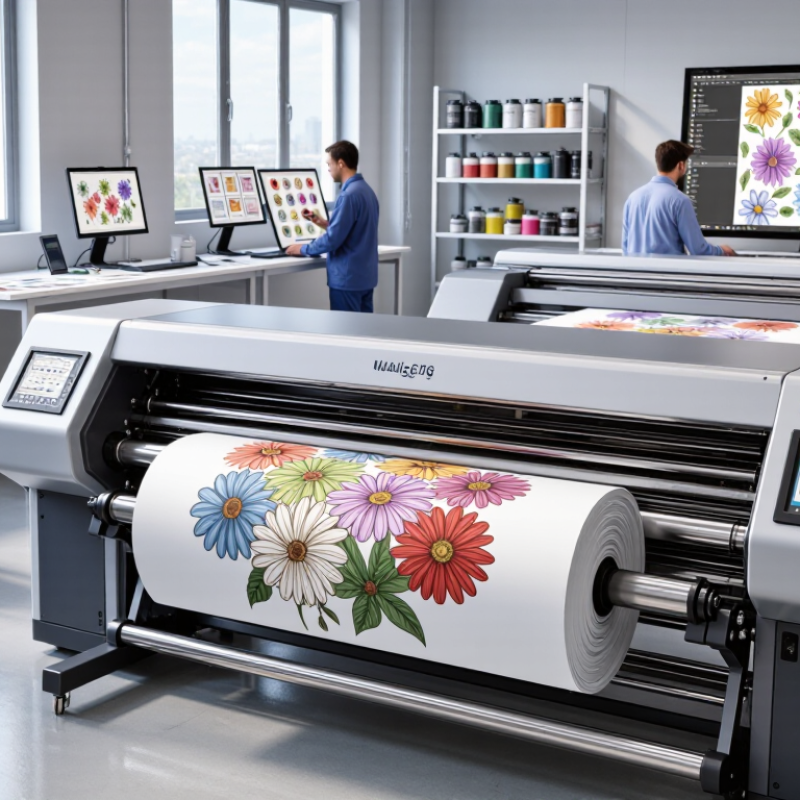
In textile manufacturing, digital printing means transferring a pattern from a computer file directly onto fabric, usually with inkjet printheads. The file controls the image; printheads place tiny drops of ink across the cloth. No screens are needed. Compared with screen printing, this can make short runs and design changes easier. A mill can print a few metres of a new floral pattern without preparing a separate screen for every colour.
The market is expanding. Grand View Research estimated the global digital textile printing market at about US$2.6 billion in 2023, and forecast annual growth of 12.1% from 2024 to 2030. Textile Exchange’s Materials Market Report 2024 estimated global fibre production at 124 million tonnes in 2023. That huge volume helps explain manufacturers’ interest in more flexible production, though it does not prove digital printing alone reduces textile waste. Its practical appeal is clearer: fewer setup steps, rapid sampling, and easier custom orders.
The process still needs preparation. Fabric may require pretreatment, and printed material often needs drying or curing. Results depend on the fibre, ink, equipment, and finishing method. A vivid sample on cotton may not behave the same on polyester. Digital printing can reduce water use in some workflows, but the savings vary. The word “digital” can sound cleaner than the process really is; energy, chemicals, and rejected prints still matter.
Digital textile printing starts with a digital artwork file, but the image needs preparation before it reaches fabric. Software separates colors and translates the design into instructions for the printer. A technician checks scale, resolution, and color profiles; tiny details can blur if the file is too small. The cloth is usually cleaned and tensioned so it feeds evenly. Some fibers also need a coating that helps ink spread predictably.
The printhead moves across the fabric and deposits controlled droplets of ink. Different inks suit different fibers, so cotton and polyester may need different processes. The fabric’s surface matters, too. A loose weave can absorb ink differently from a smooth, tightly woven cloth. Color may look slightly different after printing. This is where a test swatch helps.
Printing is only one step. Depending on the ink and material, heat or steam may fix the color, followed by washing to remove excess ink or treatment. Then the fabric is dried and inspected for streaks, uneven edges, or color shifts. Small flaws happen. Digital printing can reduce setup time for short runs, but it does not make every fabric or design simple to produce. A careful trial still saves surprises.
Digital printing sends a digital artwork file to inkjet heads, which place tiny drops directly onto prepared fabric. Traditional screen printing uses a separate mesh screen for each color, while rotary printing transfers color through engraved cylinders. That difference changes the pace of production. A printer can switch from a leafy pattern to fine stripes without making new screens. No lengthy setup.
For a small run of scarves, this can reduce setup time and avoid unused printed stock. Traditional methods often become more economical for large runs, once screens or cylinders are prepared. The surface and fabric still matter. Cotton may need pretreatment to help color bind, and polyester usually requires a different ink and heat process. A vivid preview on a monitor does not guarantee the same shade on cloth.
Digital printing also makes detailed gradients and frequent design changes practical, but it is not automatically faster or more sustainable. Pretreatment, washing, drying, and printer maintenance all affect the result. Screen printing can provide strong, consistent coverage, especially for simple designs produced in volume. The trade-off is real. Comparing methods means checking fabric, order size, color requirements, and finishing needs—not just the machine’s speed.
Digital printing compared with a traditional screen-printing setup
For a six-color design, traditional screen printing typically requires one screen per color; digital textile printing requires no physical screens. Eliminating design-specific screen preparation can make sampling, customization, and shorter production runs more practical. The comparison counts screens only—overall cost and efficiency also depend on order size, fabric, ink, and production setup.
Digital textile printing is growing because manufacturers can produce varied designs without preparing a separate screen for every pattern. A technician can adjust a digital file, check the repeat, and send a revised version to the printer. This makes short runs and frequent design changes easier to manage. Small batches matter.
The process also helps shorten the path from approved artwork to a printed sample. A designer can inspect a fabric swatch, alter a color, and request another test without rebuilding multiple screens. For manufacturers serving changing seasonal demand, that flexibility can reduce the need to hold large quantities of printed stock. Results still depend on the fabric, ink, and finishing process.
Resource use is another factor, though savings are not automatic. Digital methods can avoid some screen-making steps and may reduce leftover print paste on suitable jobs. However, printer energy use, pretreatment, and fabric finishing also affect the overall footprint. Production teams need to measure the full workflow, not just the printing stage. Color matching can also take several rounds, especially across different fabric lots, so the technology does not remove every bottleneck.
| Growth factor | Conventional production characteristic | Digital textile printing characteristic | Why it supports growth |
|---|---|---|---|
| Lower design setup requirements | Rotary and flat-screen printing generally require screens to be prepared for the design and color separations. | Artwork is prepared as a digital file and printed without making a physical screen for each design. | Removing screen preparation makes it easier to test designs and produce shorter runs economically; other setup and finishing costs still apply. |
| Short runs and frequent design changes | Screen setup is often more cost-effective when production quantities are large and designs remain unchanged for longer runs. | Design files can be changed between print jobs without preparing a new set of screens. | Manufacturers can respond to smaller orders, seasonal collections, sampling requests, and changing customer preferences. |
| Customization and product variation | Changing artwork or colorways can require additional screen preparation and production planning. | Variable artwork and colorways can be supplied as separate print files within a production workflow. | This supports personalized products, multiple design options, and smaller batches for different customer segments. |
| Faster design iteration | A new screen or color separation may be needed to evaluate a revised design through screen printing. | Design revisions can generally be made in the artwork file before printing another sample. | Quicker sampling can shorten the design-to-approval cycle, although fabric preparation, color approval, and finishing still take time. |
| Complex imagery and tonal effects | Screen printing typically uses separate screens for color separations and may require additional setup for complex artwork. | Digital systems can reproduce gradients, fine details, and multicolor artwork directly from a file, subject to equipment and fabric limitations. | Designers have greater freedom to develop detailed patterns without creating a separate physical screen for every color. |
| On-demand production | Producing large quantities in advance can leave manufacturers holding stock if demand or design preferences change. | Digital workflows can accommodate production in smaller quantities closer to confirmed demand. | This can help limit exposure to unsold printed inventory; the outcome depends on order planning and the wider supply chain. |
| Reduced screen-related materials | Screen printing involves screen preparation and cleaning between jobs. | Screenless digital printing avoids physical printing screens and their associated preparation for each design. | Avoiding screen-related steps can reduce screen-preparation materials and cleaning operations, but total environmental impact varies by process. |
| Broader digital workflow integration | Artwork preparation and production setup may involve separate physical preparation stages. | Digital artwork can be transferred into compatible printing workflows and stored for later reprints. | File-based production supports repeatable design management and connects printing more readily with digital product development. |
| Multiple fiber and ink combinations | Printing methods and colorants must be selected to suit the textile fiber and required performance. | Digital production uses different ink systems for different materials, including reactive inks for many cellulosic fabrics, acid inks for wool or nylon, and disperse inks for polyester. | The range of compatible ink and fabric combinations makes digital printing useful across varied textile applications, while pretreatment and post-treatment requirements remain important. |
Note: These are process characteristics rather than universal savings figures. Actual cost, production speed, resource use, and print quality depend on the equipment, fabric, ink, order size, pretreatment, and finishing method.
Reference: European Commission Joint Research Centre, Textiles Industry reference documents; Encyclopaedia Britannica, Textile printing.
Digital textile printing is useful when designs change quickly or orders are small. Apparel makers use it for limited collections, personalized patterns, and rapid sampling. Home-textile producers print detailed motifs on curtains and cushion covers, while sportswear applications benefit from lightweight, varied designs.
That points to expansion, not automatic savings. A short print run may reduce leftover stock, but setup, pretreatment, and energy still matter.
Material choice shapes the result. Textile Exchange’s Materials Market Report 2024 says polyester represented about 57% of global fiber production in 2023; however, printers must also handle cotton, blends, and other fabrics.
Each can need different inks and pretreatment. Small details matter. Humidity, fabric tension, or uneven coating can shift colors across a roll.
Digital systems also face limits in production speed, color consistency, wash durability, and operating cost. Smithers’ industry research identifies continuing equipment and process improvements as important to wider adoption.
Yet a newer printer does not guarantee lower environmental impact: wastewater, ink chemistry, and energy use require measurement at the factory. The gains are real, but uneven. Companies should test repeat orders and fabric performance before scaling.
It transfers a computer-based design directly onto fabric, usually using inkjet printheads. Tiny ink drops form the pattern. No screens are needed.
It can simplify short runs and design changes. A mill can print a few metres of a new floral pattern without making separate screens.
Uses include apparel, curtains, cushion covers, and sportswear. It suits detailed motifs and personalized patterns. Small details matter.
No. Cotton, polyester, and blends may need different inks or pretreatment. A vivid cotton sample may look different on polyester.
Fabric may need pretreatment, followed by drying or curing. Humidity, fabric tension, and uneven coating can shift colors across a roll.
No. Some workflows use less water, and short runs may leave less excess stock. Energy, chemicals, and rejected prints still count.
Common concerns include print speed, color consistency, wash durability, and operating cost. Results can vary. Testing repeat orders helps.
Industry estimates put its 2023 value at about US$2.6–2.7 billion, with projected annual growth of 12.1% through 2030. Estimates differ, so the figures need context.
Digital printing is transforming textile manufacturing by applying designs directly to fabric from digital files, allowing patterns and colors to be produced with precision and flexibility. The process typically involves preparing a design, treating the fabric for ink absorption, printing with specialized equipment, and finishing the material to help set the color. Compared with traditional methods, digital printing can reduce setup time, support smaller production runs, and make it easier to revise designs without preparing multiple screens or blocks.
Several factors explain why digital printing is growing in textile manufacturing, including demand for customized products, shorter production cycles, and more responsive inventory planning. It is used for apparel, home textiles, accessories, and decorative fabrics. However, manufacturers must also consider equipment and ink costs, fabric compatibility, color consistency, and production speed. As technology develops, balancing creative flexibility with reliable quality and efficient resource use will remain central to wider adoption.

Axis Print