Reducing print expenses in a factory is rarely achieved by buying cheaper ink alone. The real opportunity often hides between the artwork file, press setup, drying stage, inspection table, and warehouse shelf. This is the practical starting point for understanding how to reduce printing costs in manufacturing.
Shigeo Shingo, a respected industrial engineer and lean manufacturing authority, said, “The most dangerous kind of waste is the waste we do not recognize.” His warning applies directly to printing operations. A few extra meters of substrate per job may seem harmless. Across hundreds of orders, however, that waste becomes a measurable financial burden.
Manufacturers should begin with a simple cost map. Record ink consumption, plate changes, machine setup time, rejected rolls, energy use, and operator hours. Compare planned quantities with actual consumption. The numbers may be uncomfortable. That is useful.
Standardizing artwork checks can prevent late corrections and repeated proofs. Grouping similar jobs can reduce cleaning time and color adjustments. Preventive maintenance can improve registration accuracy and reduce spoiled materials. Digital job tracking can also reveal which products create the highest rework rates.
The approach is not perfect. A cheaper substrate may increase drying problems or customer complaints. A faster press setting may reduce quality. Each decision needs evidence from real production conditions.
This guide explores practical methods for reducing printing costs without weakening print quality, delivery reliability, or responsible manufacturing standards. It focuses on measurable improvements, informed testing, and lessons learned from the factory floor.
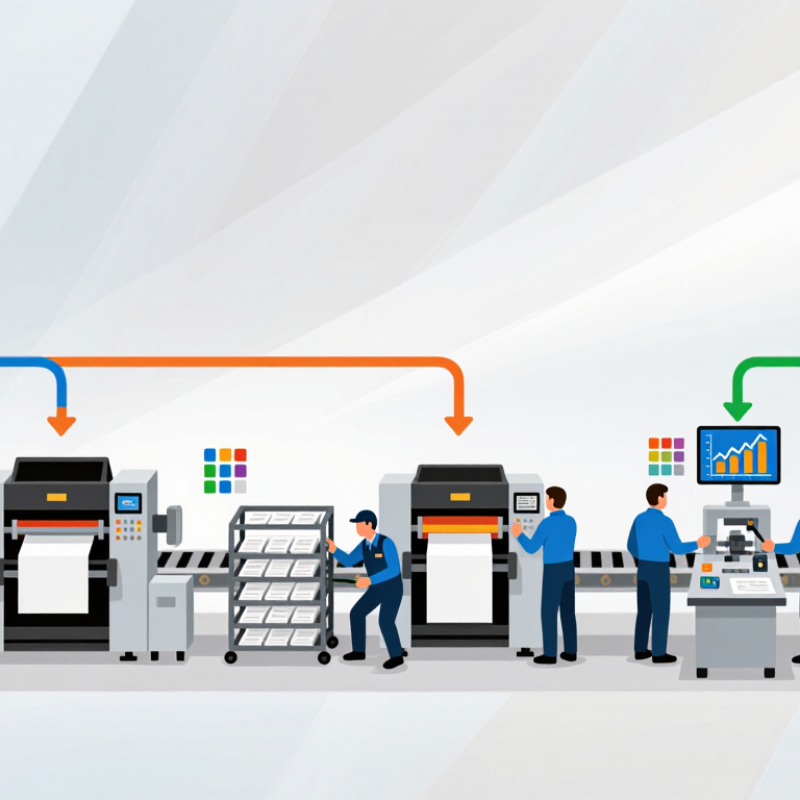
China Best How to Reduce Printing Costs in Manufacturing?
Assessing printing expenses starts with real production evidence, not supplier estimates. Collect three months of invoices, job tickets, machine-hour logs, waste records, and energy bills. Separate paper, ink, plates, labor, maintenance, depreciation, packaging, and reprints. A low cost-per-page figure can hide expensive setup waste. In one plant audit, the first estimate was wrong because overtime labor and rejected labels were excluded. That mistake matters.
Smithers’ Future of Global Printing to 2028 identifies substrates, labor, energy, and equipment utilization as persistent cost pressures. The International Energy Agency reports that motor-driven systems can consume more than 70% of industrial electricity. This makes press idle time, drying systems, compressors, and poorly scheduled runs important cost drivers. Compare energy per completed unit, not energy per operating hour. Also measure make-ready sheets, ink discarded during color matching, and downtime caused by cleaning. These details are often overlooked.
Tips: Build a cost dashboard by job, shift, and machine. Track planned versus actual waste every week. Group compatible orders to reduce setup cycles. Review the five highest-cost jobs monthly. Do not trust averages alone. A small batch with frequent color changes may cost more than a larger order, even when its unit price looks attractive. Some findings will be uncomfortable, but they reveal where corrective action is practical.
| Cost Category | Measured Cost Driver | Monthly Volume or Basis | Monthly Cost (USD) | Share of Total | Recommended Assessment or Control |
|---|---|---|---|---|---|
| Materials | Paper, labels, forms, and specialty media | Approximately 210,000 printed pages | $4,200 | 21.9% | Measure paper consumption by production line, reduce unnecessary color pages, standardize paper sizes, and review duplex-printing settings. |
| Consumables | Toner, ink, ribbons, drums, and other replaceable supplies | Approximately 210,000 pages | $3,100 | 16.2% | Track cost per page, identify high-coverage documents, consolidate consumable specifications, and control emergency purchases. |
| Labor | Operator time for printing, sorting, checking, and distributing documents | 240 labor hours | $3,600 | 18.8% | Calculate labor minutes per print job, batch similar jobs, automate document release, and reduce manual sorting and rework. |
| Maintenance | Preventive maintenance, service visits, spare parts, and repairs | Planned and unplanned service activity | $2,400 | 12.5% | Compare preventive-maintenance cost with breakdown cost, monitor fault frequency, and replace unreliable equipment based on total cost of ownership. |
| Downtime | Production interruption caused by printer faults, jams, or waiting time | Approximately 45 hours of disruption | $2,700 | 14.1% | Record downtime by machine and cause, maintain critical spare parts, and assign response-time targets for recurring failures. |
| Reprints and Waste | Misprints, obsolete forms, incorrect settings, and damaged output | Estimated 6% of printed pages | $1,800 | 9.4% | Use print previews, approval workflows, barcode validation, standardized templates, and root-cause analysis for repeated errors. |
| Energy | Electricity consumed by printers, finishing equipment, and support devices | Approximately 3,000 kWh | $450 | 2.3% | Enable sleep modes, schedule automatic shutdown, group print runs, and replace inefficient equipment when lifecycle economics support it. |
| Inventory and Storage | Stockholding, document storage, obsolete forms, and internal movement | Approximately 12 cubic meters of storage | $900 | 4.7% | Set maximum and reorder levels, digitize controlled records where permitted, and remove obsolete printed materials through document reviews. |
| Estimated Total Monthly Printing-Related Cost | $19,150 | 100.0% | Use this baseline to prioritize actions by cost impact, frequency, and implementation effort. | ||
| Highest-Impact Cost Drivers | Materials, labor, consumables, downtime, and maintenance account for $16,000 per month, or approximately 83.6% of the assessed printing-related cost. | ||||
Compare total ownership cost, not only the purchase price. Include paper, labels, ink, maintenance, energy, and downtime. A cheaper printer may need costly supplies. Test real production labels before buying large quantities.
Choose equipment with automatic sleep modes and durable print heads. Replaceable maintenance parts can reduce service interruptions. Certified efficient equipment may use up to 30% less energy. Small savings become visible across long shifts.
Match paper, films, ribbons, and labels to the printer and factory environment. Cheap labels may curl, jam, or lose adhesion. We once chose a low-cost material that increased cleaning time. The saving was not real.
Standard sizes simplify storage and purchasing. They also reduce obsolete inventory. Fewer material types create fewer setup changes. Keep a small reserve, but avoid overstocking.
Standardize page sizes and trim unnecessary margins. Avoid large full-coverage areas when they add little value. Use nested layouts and duplex printing when suitable. Every saved sheet matters.
Group similar jobs by material, color settings, and finishing method. This reduces cleaning and setup changes. Digital proofing can catch missing fonts and incorrect dimensions. Small errors multiply.
No. Adjust resolution, drying temperature, ink limits, and speed for each material. Excessive resolution may increase processing time without visible improvement. Weak drying can create hidden rework. The cheapest setting is not always best.
Record materials, ink, setup waste, labor minutes, energy, reprints, and downtime. Calculate cost per good sheet, not cost per production run. Compare planned quantities with actual output. Small details matter.
Review a simple dashboard every week. Investigate unusual differences within 48 hours. Measure savings against the original baseline after each correction. Our first dashboard missed cleaning supplies and overtime. That mistake changed the process.
Check whether the data excludes slow setup, overtime, or material waste. Ask operators to challenge the figures. A low reprint rate may hide other expenses. Review the evidence again.
Learning how to reduce printing costs in manufacturing begins with a clear assessment of current expenses. Manufacturers should review spending on equipment, paper, ink, toner, energy, labor, and reprints to identify the biggest cost drivers. Selecting printers, materials, and consumable supplies based on total operating cost—not only purchase price—can create meaningful long-term savings. Durable equipment, suitable media, and efficient supplies can also improve production consistency.
Further savings come from optimizing print layouts, reducing unnecessary color or excess coverage, standardizing workflows, and adjusting production settings for each job. Preventive maintenance and regular quality inspections help avoid defects, downtime, and wasted materials. Finally, manufacturers should track usage, waste rates, maintenance expenses, and cost per printed unit through clear performance measures. By reviewing these results regularly and refining processes, companies can control printing expenses continuously while maintaining reliable quality and meeting production requirements.

 Axis Print