For manufacturers, the question “how much does industrial digital printing cost” rarely has one fixed answer. Equipment type, print width, production volume, ink system, and finishing requirements all change the final figure. A compact industrial printer may cost tens of thousands of dollars, while a high-output production line can exceed several hundred thousand dollars. These figures are practical reference points, not universal quotations.
China offers a broad supplier market, from established equipment manufacturers in Guangdong and Jiangsu to specialized integrators serving packaging, textiles, labels, and commercial graphics. Buyers should compare more than the machine price. Installation, operator training, software, spare parts, maintenance, shipping, taxes, and factory preparation can add substantial costs. A low initial quote may become expensive after these items appear.
Real project evaluation requires sample testing and a transparent total-cost calculation. Ask suppliers to print your materials, measure ink consumption, confirm rated speed, and provide service-response terms. Check whether the stated speed reflects continuous production or a carefully controlled demonstration. That difference matters. It can be overlooked.
This guide examines Chinese industrial digital printing prices through equipment categories, operating expenses, financing considerations, and supplier reliability. It also considers return on investment, because the cheapest machine may not deliver the lowest cost per finished sheet or meter. Some estimates remain imperfect. Material waste, changing ink prices, regional labor costs, and unexpected downtime can shift the result. Careful buyers leave room for those realities before signing a purchase agreement.
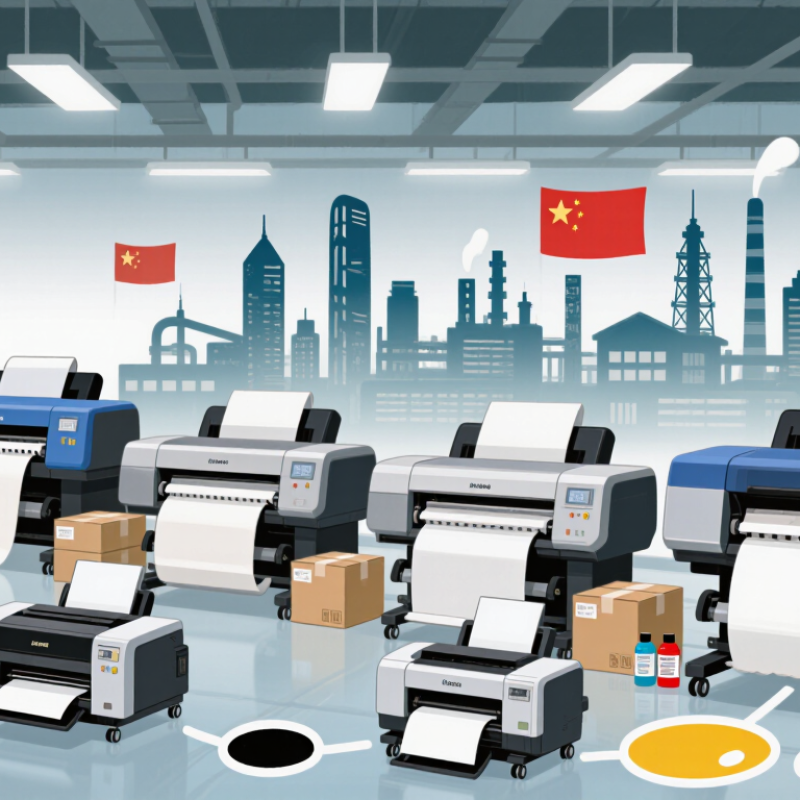
Industrial digital printing in China means production equipment printing directly onto labels, packaging, textiles, ceramics, metal sheets, or finished components. It is not simply a larger office printer. It connects files, color management, curing, inspection, and factory scheduling.
Smithers estimated the global digital print market at about US$167.5 billion in 2023. Its forecast suggests continued growth through 2028, driven by shorter runs and personalized production. China’s manufacturing scale makes these advantages practical. A factory can change designs without plates, reduce storage, and produce hundreds of variations quickly. However, equipment may cost hundreds of thousands of yuan, while inks, pretreatment, maintenance, labor, and finishing add recurring expenses. Unit costs usually fall after stable volume is reached. The payback is not automatic.
Tips: Compare total cost per saleable piece, not machine price alone. Request test runs using your real substrate and artwork. Measure waste, color rework, curing time, and operator hours. China’s National Bureau of Statistics reported manufacturing PMI at 49.1 in February 2024, showing uneven demand. That matters. A machine running below capacity can become expensive, even with low labor costs. Smithers data is useful, but broad global averages cannot replace a factory-level costing sheet. I would recheck energy prices, import duties, and service coverage before approving investment. One overlooked variable can change the result.
Industrial digital printing in China has no single price. A production quote may range from a few hundred to several thousand RMB per job. The machine type matters. High-speed inkjet usually lowers unit cost for long runs. Toner systems can suit shorter, sharper work. Smithers estimated the global digital packaging print market at about US$22 billion in 2023, showing strong demand for flexible production.
Several cost drivers appear in a Chinese quotation. Ink or toner can represent 15–30% of direct production cost, depending on coverage and color density. Substrate choice also matters. Coated paper, film, board, and specialty materials require different settings. Finishing may add cutting, folding, lamination, or inspection charges. Labor, electricity, maintenance, software, waste, and delivery can change the final price. The China Printing Industry Association reported continued growth in packaging and label output, but this does not mean every digital job is economical. A small order may carry high setup and file-preparation costs. I would request a real test run, not trust a sample sheet alone.
Tips: Ask for separate prices for printing, finishing, materials, and delivery. Provide page size, print coverage, quantity, and color requirements. Compare the cost per finished piece, not only the machine-hour rate. Also check the quoted waste allowance. It is often overlooked. Use recent supplier data and at least three comparable quotations. Smithers and Keypoint Intelligence reports can help benchmark technology trends, but local substrate and labor conditions still decide the payable RMB amount.
Indicative production-cost structure by application, shown in RMB per square metre. Actual quotations vary with volume, substrate, ink coverage, finishing, and equipment requirements.
Substrate is usually the largest cost component, while ink coverage, finishing complexity, short-run setup, labor, energy, and equipment maintenance also affect the final price. Higher volumes generally reduce the cost per square metre by spreading preparation and setup expenses.
How Much Does Industrial Digital Printing Cost in China?
Typical Price Ranges for Equipment, Materials, and Printing Services
Industrial digital printing costs in China vary by speed, format, automation, and after-sales support. A mid-volume digital press commonly costs between US$80,000 and US$300,000. High-output systems may exceed US$1 million. Wide-format equipment often falls between US$30,000 and US$180,000. These are practical market ranges, not fixed quotations.
Materials add a quieter expense. Industrial ink usually costs about US$20–80 per kilogram, depending on chemistry and curing requirements. Specialty substrates can cost two to five times more than standard paper. Printing services may range from US$0.03 to US$0.30 per square foot. Short runs often cost more because setup and color calibration remain fixed. Smithers’ 2024 packaging study identifies continued digital-print growth, while Keypoint Intelligence reports rising demand for customized, shorter production runs. That demand supports higher unit prices.
Tips: Ask for a complete cost-per-print calculation. Include ink, substrate, labor, maintenance, electricity, and waste. Request test samples using your actual material. A low machine price can hide expensive printheads or service delays. These estimates are useful, but imperfect. Local taxes, import procedures, and installation can change the final budget sharply. In practice, the cheapest quote is rarely the cheapest operation.
Typical Price Ranges for Equipment, Materials, and Printing Services
| Cost Category | Typical Specification or Use | Indicative Price in China (RMB) | Approx. USD Equivalent | Main Cost Factors |
|---|---|---|---|---|
| Industrial Digital Printer | Entry-level production equipment for labels, signage, textiles, or short-run packaging | ¥300,000–¥1,200,000 | US$41,000–US$165,000 | Print width, production speed, ink configuration, automation, and drying system |
| Mid-Range Production Printer | Continuous commercial or industrial printing with higher throughput and longer duty cycles | ¥1,200,000–¥4,500,000 | US$165,000–US$620,000 | Number of printheads, color channels, maximum speed, RIP software, and finishing integration |
| High-Volume Industrial Line | Automated systems for packaging, décor, textiles, ceramics, or high-volume commercial work | ¥4,500,000–¥15,000,000+ | US$620,000–US$2,070,000+ | Inline coating, inspection, cutting, feeding systems, robotics, and customized engineering |
| Installation and Commissioning | On-site setup, calibration, operator training, and production testing | ¥20,000–¥300,000 | US$2,800–US$41,000 | Equipment complexity, installation distance, factory preparation, and training duration |
| Water-Based or Pigment Ink | Textile, paper, label, packaging, and indoor graphics applications | ¥100–¥450 per liter | US$14–US$62 per liter | Ink chemistry, color density, required durability, and purchasing volume |
| UV-Curing Ink | Rigid substrates, signage, décor panels, industrial parts, and specialty products | ¥180–¥550 per liter | US$25–US$76 per liter | White or clear ink usage, curing requirements, adhesion performance, and color coverage |
| Sublimation Ink | Polyester textiles, sportswear, flags, soft signage, and promotional fabrics | ¥90–¥300 per liter | US$12–US$41 per liter | Color concentration, transfer efficiency, fabric type, and print coverage |
| Coated Paper or Film Media | Labels, posters, flexible packaging, decals, and commercial graphics | ¥3–¥25 per m² | US$0.40–US$3.45 per m² | Material thickness, coating quality, roll width, water resistance, and order quantity |
| Textile Media | Polyester fabric, flags, display textiles, apparel fabric, and décor materials | ¥8–¥60 per m² | US$1.10–US$8.30 per m² | Fabric weight, weave, flame resistance, finishing, and color requirements |
| Rigid Board or Panel | Foam board, acrylic, PVC, aluminum composite, wood, or décor panels | ¥25–¥220 per m² | US$3.45–US$30 per m² | Substrate type, thickness, surface treatment, flatness, and cutting requirements |
| Basic Digital Printing Service | Standard indoor graphics, posters, labels, or short-run commercial work | ¥15–¥80 per m² | US$2.10–US$11 per m² | Resolution, color coverage, media type, minimum order, and file preparation |
| UV or Specialty Surface Printing | Rigid materials, textured surfaces, white ink, varnish, or specialty effects | ¥80–¥300 per m² | US$11–US$41 per m² | Substrate preparation, white or clear layers, curing, registration, and finishing |
| Textile Printing Service | Roll-to-roll fabric printing, flags, apparel panels, and soft signage | ¥25–¥180 per m² | US$3.45–US$25 per m² | Fabric type, pretreatment, transfer or fixation, color density, and sewing requirements |
| Packaging and Label Printing | Short-run cartons, flexible packaging, labels, prototypes, and variable-data work | ¥0.08–¥1.50 per piece | US$0.01–US$0.21 per piece | Size, substrate, quantity, finishing, die-cutting, and variable-data complexity |
| Finishing and Post-Processing | Laminating, trimming, hemming, eyelets, mounting, sewing, or die-cutting | ¥5–¥120 per m² | US$0.70–US$16.50 per m² | Process type, manual labor, shape complexity, material thickness, and order volume |
| Annual Maintenance | Preventive service, calibration, consumable parts, and technical support | Typically 3%–8% of equipment purchase price per year | Varies by equipment value | Usage hours, printhead replacement, service response time, and contract coverage |
Pricing notes:
The figures are indicative market ranges for mainland China and are shown before value-added tax, international freight, installation outside China, customs duties, and financing costs. USD conversions use an approximate rate of ¥7.25 = US$1. Actual quotations vary according to specifications, order volume, configuration, material quality, service scope, and exchange rates.
Industrial digital printing costs in China depend on the complete project, not only the printer price. A reliable calculation starts with the required output. Record sheet size, daily volume, color coverage, resolution, substrate, and delivery schedule. A short sample run can expose hidden problems.
Separate fixed and variable costs. Fixed costs may include equipment purchase or lease, installation, software, training, and factory preparation. Variable costs include ink, paper or film, labor, electricity, maintenance, inspection, packaging, and inland transport. Add plate-free file preparation, color management, and finishing when required.
A simple formula is: total project cost = setup cost + production cost per unit × quantity + logistics and tax.
Use a cost sheet in RMB, then compare it with the supplier’s quotation. Ask whether ink consumption is measured by average coverage or by the heaviest design. Confirm waste rates, minimum order quantities, warranty service, spare parts, and response times. These details affect the real price.
Our first estimate was too optimistic because it ignored test prints and rejected rolls. That mistake matters. A practical allowance of 3% to 8% for waste may be reasonable, but the correct figure depends on material and operator control. Request production samples, inspect color consistency, and verify the final packed weight before approving the budget.
Ways to Compare Suppliers and Control Printing Expenses in China
Industrial digital printing in China is rarely priced by machine time alone. A realistic quote includes substrate, ink coverage, file preparation, finishing, packaging, and delivery. Ask suppliers to separate every item in writing. This makes hidden charges easier to identify.
When I compare suppliers, I request the same artwork, material, quantity, and delivery term from each factory. A small color sample can reveal banding, uneven density, or weak fine text. It costs little compared with correcting a large production run. I also check the supplier’s equipment, inspection records, operator experience, and capacity during peak seasons. Photos help, but a live video inspection is more reliable. Still, neither method replaces a physical sample.
Unit price alone can mislead. A cheaper offer may use thinner material, lower ink coverage, or slower finishing. Compare usable output, not only the printed area. Confirm minimum order quantities, setup fees, reprint rules, pallet charges, and export packaging. Freight can change the final cost sharply, especially for bulky panels. Request both factory pickup and delivered estimates.
Payment terms and currency changes also deserve attention. A fixed validity period protects your budget. I once accepted a low quote without checking file preparation charges; the final invoice was higher than expected. That mistake was avoidable. For repeated orders, negotiate stable material specifications and a documented approval sample. Keep one approved sample in your office. It becomes a practical reference when quality opinions differ.
Mid-volume presses often cost US$80,000 to US$300,000. High-output systems may exceed US$1 million. Wide-format equipment commonly costs US$30,000 to US$180,000.
Include ink, substrates, labor, electricity, maintenance, inspection, packaging, and transport. Specialty materials may cost two to five times more than standard paper.
Printing services may range from US$0.03 to US$0.30 per square foot. Short runs often cost more because setup and calibration remain fixed.
Use this formula: setup cost plus unit production cost multiplied by quantity, then add logistics and taxes. Include installation, software, training, and factory preparation.
A 3% to 8% allowance may be practical. Actual waste depends on the material, design coverage, machine settings, and operator control.
Request separate prices for ink, substrate, file preparation, finishing, packaging, delivery, and taxes. Hidden charges become easier to spot.
Send each supplier identical artwork, material, quantity, and delivery terms. Compare usable output, not only the printed area. A physical sample matters more than attractive photos.
Check setup fees, minimum quantities, file preparation, reprints, pallet charges, and export packaging. Freight can rise sharply for bulky panels.
Yes. Inspect color consistency, fine text, banding, density, and rejected rolls. A small sample can expose a large problem.
A complete cost-per-print calculation is more reliable than the machine price alone. Our first estimate was too optimistic because it ignored testing and waste. That mistake was avoidable.
Industrial digital printing in China refers to the use of digital printing systems for producing customized, short-run, or high-volume industrial products, including packaging, labels, decorative panels, and functional components. The answer to “how much does industrial digital printing cost” depends on several factors, such as equipment type, print speed, resolution, substrate, ink consumption, labor, energy, maintenance, finishing, order volume, and delivery requirements. Equipment investment can range from relatively affordable entry-level systems to advanced production lines requiring substantial capital, while materials and outsourced printing services are usually priced according to area, quantity, complexity, and customization.
To calculate the total project cost, buyers should combine equipment depreciation, installation, training, consumables, labor, maintenance, quality control, packaging, and logistics. Comparing suppliers requires more than reviewing the initial quotation: businesses should evaluate print quality, production capacity, technical support, spare-part availability, lead times, warranty terms, and long-term operating costs. Careful material selection, standardized workflows, accurate demand forecasting, and supplier negotiation can help control expenses while maintaining consistent production results.

Axis Print