China Top 10 Digital Printing Trends in Ceramics?

Time:2026-10-23 Author:Isabella
0%

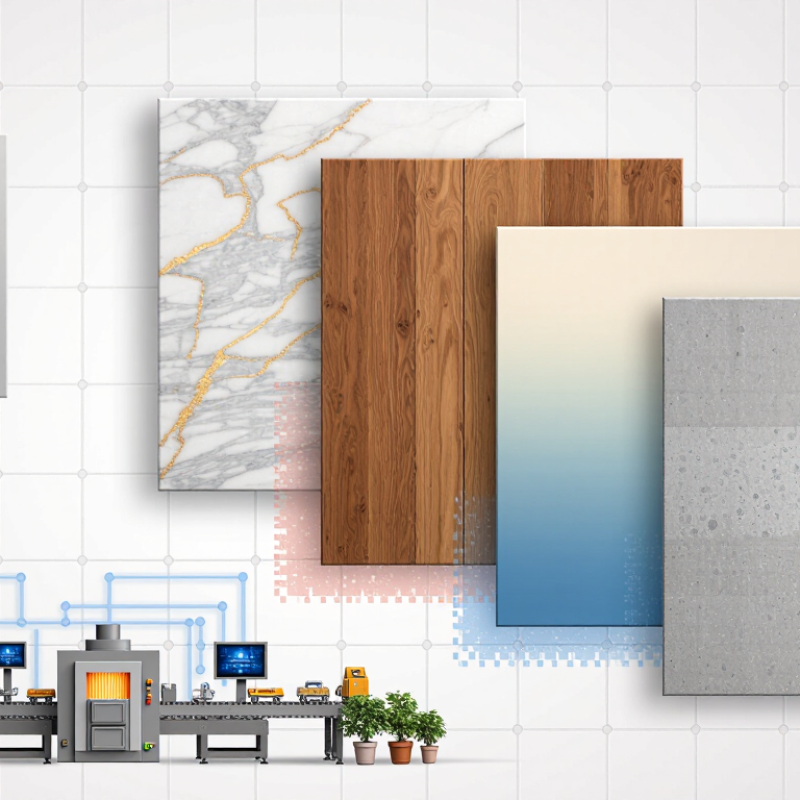
Ceramic decoration is moving from fixed patterns toward faster, more expressive production. This change explains how digital printing is transforming the ceramics industry across factories, studios, and retail spaces. Inkjet systems now place microscopic drops of pigment onto tiles with remarkable accuracy. They can reproduce marble veins, wood grain, concrete textures, and soft color gradients.

According to Emilio Mussini, a recognized ceramic decoration specialist, “Digital technology gives designers more freedom, while making production more responsive to market demand.” His observation reflects what many manufacturers experience on the factory floor. Operators can change a surface design through software instead of replacing engraved rollers. A single production line may create several patterns during one shift. This reduces storage needs and supports shorter, more personalized product runs.

The China Top 10 Digital Printing Trends in Ceramics will examine this transformation through practical developments. These include high-definition inkjet decoration, digital glazing, textured surfaces, sustainable inks, and artificial-intelligence-assisted design. It will also consider smart factories, data-driven quality control, customized tiles, and faster product launches. The final trend concerns integration, where printers, kilns, software, and inspection systems work as one connected process.

The progress is significant.

Yet digital printing is not a perfect solution. Ink costs remain important. Color consistency can still challenge inexperienced teams. Energy use has not disappeared. Some designs look impressive on a screen but lose depth after firing. These limitations deserve attention, because reliable innovation requires testing, skilled operators, and honest measurement—not only attractive showroom samples.
China Top 10 Digital Printing Trends in Ceramics?

Digital Printing’s Role in Modern Ceramic Manufacturing

Digital printing is reshaping modern ceramic manufacturing by moving decoration from fixed rollers to flexible inkjet systems. According to the ACIMAC/MECS 2024 World Production and Consumption of Ceramic Tiles report, global tile production reached about 16.7 billion square meters in 2023. At this scale, faster design changes and lower setup waste matter greatly.

Modern lines can print stone veins, wood grains, and fine geometric textures directly onto tile surfaces. High-resolution printheads also support smaller production batches without changing physical screens. Smithers’ 2023 industrial digital printing forecast expects the sector to grow by roughly 5% annually through 2028. That growth reflects demand for customization, shorter product cycles, and more responsive manufacturing.

The process is not flawless. Ink stability can change with humidity, glaze chemistry, and nozzle maintenance. A dusty printhead may leave a visible white line across a premium slab. Manufacturers now combine automated color control, inline cameras, and predictive maintenance to reduce these defects. Energy savings are possible too, especially when digital decoration reduces screen preparation and material loss. Yet claims of zero waste remain unrealistic. Careful testing is still essential, particularly when recycled ceramic bodies or new surface coatings enter production.

High-Definition Inkjet Printing and Surface Detail

High-Definition Inkjet Printing and Surface Detail

High-definition inkjet printing is reshaping ceramic surfaces in China. Fine droplets can build marble veins, concrete pores, wood grain, and shallow relief with controlled variation. These details are not merely visual. They influence touch, light reflection, cleaning performance, and perceived material value.

ACIMAC’s World Production and Consumption of Ceramic Tiles report estimated global tile production at about 16.8 billion square meters in 2023. China remained the largest production base, creating strong demand for faster and more flexible decoration systems. Smithers’ The Future of Inkjet Printing to 2028 also forecasts continued growth for industrial inkjet applications, supported by shorter runs and digital customization. The numbers suggest scale, but they do not guarantee quality.

Everyday production reveals the harder part. A high-resolution image may lose character after firing if ink absorption, glaze chemistry, or kiln temperature shifts. Small defects matter. A vein can look too sharp. A pore can disappear. Technicians often adjust color profiles, droplet timing, and firing curves together, rather than separately. Surface scanners help compare printed tiles under angled light, where weak relief becomes obvious. Yet perfect repetition can look artificial. Some manufacturers are testing controlled irregularity, though consistency remains difficult. Digital printing is powerful, but ceramic surfaces still need judgment, testing, and occasional humility.

China Top 10 Digital Printing Trends in Ceramics? - High-Definition Inkjet Printing and Surface Detail

No. Digital Printing Trend Technical Direction Typical Measurable Range or Indicator Ceramic Surface Result Main Production Benefit
1 High-definition inkjet decoration Multi-pass or high-resolution piezoelectric inkjet deposition using ceramic pigment inks. Common industrial resolution: approximately 360–600 dpi; practical print speed commonly reaches about 30–80 m/min, depending on tile format and print quality. Sharper edges, finer veins, cleaner geometric patterns, and improved image registration. Supports realistic marble, stone, wood, and textile visuals with fewer physical screens.
2 Smaller ink droplets and grayscale control Variable-drop technology adjusts deposited ink volume according to image density and tonal requirements. Industrial ceramic inkjet systems commonly operate with droplet volumes in the approximate 6–42 pL range, depending on printhead configuration. Smoother gradients, reduced visible dot structure, and more natural transitions between light and dark areas. Improves tonal control without requiring additional analog printing screens.
3 Digital glazing and full-surface effects Digitally controlled application of glaze, protective coating, or functional surface materials. Digital deposition can be selectively controlled by image area, with coating weight varied according to the programmed pattern and line speed. Gloss, satin, matte, and localized sheen can be combined on the same tile surface. Reduces blanket coating and enables more precise surface-effect management.
4 Relief, texture, and 3D surface detail Layered digital material deposition creates localized thickness differences before firing. Surface relief is typically designed as a controlled height map; the achievable height depends on material rheology, deposited volume, and firing shrinkage. Tactile stone pores, wood grain, leather patterns, anti-slip textures, and raised decorative elements. Synchronizes visual information with physical texture for a more authentic surface appearance.
5 Large-format continuous patterning High-resolution digital files are repeated, mirrored, or randomized across larger tile dimensions. Large-format ceramic slabs commonly exceed 1 m in one dimension, requiring image management across extended print widths. Fewer visible repeats and improved continuity across walls, floors, countertops, and architectural panels. Makes natural-material reproduction more convincing at architectural scale.
6 Color-management automation Closed-loop calibration, digital color profiling, nozzle compensation, and image prepress automation. Key control indicators include nozzle status, ink density, color deviation, registration offset, and repeat consistency. More stable tone, reduced banding, consistent shade matching, and improved batch-to-batch uniformity. Reduces manual adjustment and helps control production variation.
7 Short-run and customized decoration Direct-to-tile digital workflows eliminate the need for dedicated cylinders, rollers, or screen sets for each design. Artwork can be changed between production orders without changing physical printing screens; economic batch size depends on setup, ink, and firing costs. Custom patterns, project-specific colorways, limited editions, and rapid design variations. Shortens design changeover and lowers the tooling burden for small or medium production runs.
8 Data-driven defect detection Cameras and software inspect missing nozzles, streaks, registration errors, surface contamination, and shade variation. Inspection parameters may include line-scan image data, defect size, defect frequency, and tile-to-tile position accuracy. Fewer visible printing defects and faster identification of unstable ink or machine conditions. Supports preventive maintenance and reduces the amount of nonconforming product.
9 Synchronized decoration and firing control Print data, glaze application, conveyor speed, drying, and kiln recipes are coordinated to maintain image and surface consistency. Ceramic firing commonly occurs within approximately 1,100–1,250 °C, depending on the body, glaze system, and product type. More predictable color development, gloss level, surface texture, and dimensional stability after firing. Reduces process interaction between decoration and kiln conditions.
10 Lower-waste digital production On-demand ink application, recipe-based setup, and digital artwork management reduce excess materials and obsolete design inventory. Waste performance depends on ink overspray, purge frequency, setup losses, rejected tiles, and production changeover requirements. Consistent decoration with less unused screen ink, fewer physical tooling changes, and reduced design-related scrap. Improves material efficiency while supporting faster design turnover and more flexible production planning.
Data note: The numerical values are representative industry operating ranges and technical indicators for ceramic digital printing. Actual performance varies according to tile body, glaze chemistry, printhead configuration, image coverage, line speed, kiln recipe, and quality requirements.

Sustainable Inks, Materials, and Production Practices

China Top 10 Digital Printing Trends in Ceramics?
Sustainable Inks, Materials, and Production Practices

China’s ceramic digital-printing market is shifting from color speed toward measurable resource efficiency. Thinner ink films can reduce pigment use and surface defects. Low-VOC formulations also deserve attention where performance allows. However, “green ink” is not automatically sustainable. Its full impact includes pigment sourcing, cleaning liquids, packaging, and disposal.

The IEA’s Energy Technology Perspectives 2024 reports that industry consumes about 37% of global final energy. In ceramic factories, firing remains a major energy and emissions hotspot, according to the European Commission’s Ceramic Manufacturing BREF. Digital printing cannot solve kiln emissions alone. Yet accurate decoration reduces setup waste, screen preparation, and rejected tiles during short production runs. Factory trials often reveal another issue: unstable ink viscosity can increase nozzle cleaning and hidden waste.

UNEP’s Global Resources Outlook 2024 warns that global material extraction could rise by 60% by 2060 without stronger efficiency measures. This supports recycled ceramic powders, lighter tile bodies, and closed-loop cleaning systems. Recycled materials are promising, but they may change rheology, drying behavior, and color consistency. Operators should record ink consumption per square meter, water use, firing energy, and first-pass yield. The data may look imperfect. That is useful. Honest measurements expose where sustainability claims still need improvement.

Smart Automation and Data-Driven Ceramic Printing

China Top 10 Digital Printing Trends in Ceramics: Smart Automation and Data-Driven Ceramic Printing

Smart automation is changing how ceramic factories manage digital printing. Modern production lines can monitor ink viscosity, nozzle temperature, tile speed, and workshop humidity in real time. These measurements help technicians adjust printing conditions before defects spread across a full batch. The change is measurable. Color variation becomes easier to trace, while excessive ink use and cleaning time can decline.

Data also connects design, printing, glazing, and quality inspection. A digital record can show which settings produced a specific surface effect or color result. Operators can compare production data with previous orders and repeat successful parameters more accurately. Machine vision systems detect missing lines, uneven coverage, and small pattern shifts. That matters. A defect found within seconds may prevent hundreds of imperfect tiles.

However, automation is not magic. Poorly calibrated sensors can create false confidence. Humidity changes may affect ink behavior more than a dashboard suggests. Experienced technicians still need to inspect surfaces under different lighting and question unusual readings. In some factories, data collection remains incomplete because workers record adjustments inconsistently. That weakness deserves attention. Reliable ceramic printing needs clean data, regular maintenance, trained operators, and clear responsibility when results drift. Some manual judgment remains essential, especially for textured finishes and complex decorative effects.

Emerging Applications and Future Market Trends

China’s Top 10 Digital Printing Trends in Ceramics

China’s ceramic printing market is moving from decoration toward intelligent surface manufacturing. The 2024 ACIMAC-MECS report estimates global tile production at nearly 16 billion square metres in 2023. China remains the largest production base. That scale encourages faster digital adoption, especially for short runs and customized designs.

Ten visible directions are emerging: architectural slabs, façade panels, kitchen backsplashes, hotel interiors, retail walls, public art, anti-slip floors, tactile textures, small-batch production, and personalized residential surfaces. Digital inkjet systems reduce plate preparation and support rapid pattern changes. They also reproduce marble veins, wood pores, and soft concrete effects with convincing detail. Smithers’ ceramic printing research identifies digital decoration as a continuing growth area through 2028, driven by flexibility and reduced setup waste. The opportunity looks substantial.

The future will depend on more than sharper images. Designers are testing relief effects, variable gloss, and digitally controlled glaze placement. Data-driven color management may reduce shade variation between production batches. Energy efficiency is also becoming important as manufacturers face stricter environmental expectations. Still, the industry sometimes exaggerates personalization. Many buyers still prefer familiar stone patterns. That is a useful warning. Digital printing must prove durability, cleanability, and cost value under real factory conditions. Small experiments are promising, but not every fashionable texture deserves mass production.

FAQS

How is digital printing changing ceramic manufacturing?

It replaces fixed rollers and screens with flexible inkjet systems. Design changes become faster. Manufacturers can print stone veins, wood grains, and geometric textures directly onto tiles.

Does digital printing reduce production waste?

It can reduce setup materials, screen preparation, and cleaning time. Smaller batches also need fewer physical changes. However, zero waste is not realistic. Testing still matters.

Can digital printing support customized ceramic designs?

Yes, it supports short runs and personalized surfaces without changing physical screens. A factory can switch from marble veins to wood pores quickly. Not every custom design is commercially useful.

What types of ceramic products use digital printing?

Applications include architectural slabs, façade panels, backsplashes, hotel interiors, retail walls, and residential surfaces. Digital systems also support anti-slip floors and tactile textures. Some fashionable effects may fail in mass production.

How does automation improve printing quality?

Sensors can track ink viscosity, nozzle temperature, tile speed, and workshop humidity. Cameras may detect missing lines or uneven coverage within seconds. That can stop hundreds of imperfect tiles.

Can factory data replace experienced technicians?

No. Poorly calibrated sensors can create false confidence. Technicians still need to inspect surfaces under different lighting. Human judgment remains important for textured finishes and unusual readings.

What problems can affect digital ceramic printing?

Humidity, glaze chemistry, dust, and weak nozzle maintenance can change print quality. A dusty printhead may leave a white line across a slab. Small errors spread quickly.

Is digital printing automatically more energy-efficient?

It may save energy by reducing screen preparation and material loss. The result depends on equipment, cleaning routines, and production conditions. The improvement is possible, not guaranteed.

What is the future of digital printing in ceramics?

Future systems may control relief, gloss, glaze placement, and color more precisely. Forecasts suggest continued growth through 2028. Still, durability, cleanability, and cost must prove themselves in real factories. Some assumptions remain untested.

Conclusion

Digital printing is reshaping ceramic manufacturing by combining precision, flexibility, and efficient production. This article explores how digital printing is transforming the ceramics industry, from high-definition inkjet systems that reproduce fine patterns, textures, and natural material effects to streamlined workflows that reduce setup time and support customized designs. Advanced printing technologies enable manufacturers to create more detailed surfaces while maintaining consistent quality across different ceramic products.

The discussion also examines sustainable inks, responsible material use, and production practices that can help reduce waste, energy consumption, and unnecessary resource use. Smart automation and data-driven monitoring further improve accuracy, maintenance, and process control by allowing production decisions to respond to real-time information. Finally, the article considers emerging applications in architectural surfaces, interior decoration, tableware, and specialty ceramics, highlighting how digital printing may encourage greater design creativity, shorter product cycles, and more adaptable market strategies in the future.

Isabella

Isabella

Isabella is a dedicated marketing professional with a sharp focus on driving brand growth and engagement through strategic content creation. With an extensive background in digital marketing, she combines her passion for storytelling with her keen understanding of industry trends to deliver......