What Are the Top Industrial Printing Trends in 2026?

Time:2026-11-06 Author:Liam
0%

What are the latest trends in industrial printing technology? In 2026, the answer is less about a single breakthrough and more about connected production choices. Manufacturers are combining digital inkjet, screen printing, and conventional methods to match print runs, substrates, and finish requirements. A packaging line may switch between short personalized batches and longer repeat orders while keeping color checks close to the press. The details matter.

Automation is moving beyond faster feeding. Cameras and inline sensors can flag registration drift, missing marks, or color variation before a full batch is wasted. Data links between artwork, press settings, and inspection records can also make jobs easier to repeat. Still, a dashboard cannot fix poor calibration or unclear specifications. Human review remains essential.

Sustainability is another practical pressure, not just a marketing theme. Buyers are asking about ink chemistry, energy use, curing systems, and recyclable or reusable substrates. The right choice depends on the product and its end-of-life route. Hybrid presses, suitable low-migration inks, and more efficient curing may help, but each needs testing on the actual material. Results vary.

This guide examines the industrial printing trends shaping investment decisions in 2026, including AI-assisted quality control, connected workflows, flexible digital production, and material innovation. It also considers where adoption can disappoint: integration costs, operator training, and inconsistent data can slow progress. There is no universal best press. The useful question is which technology solves a measurable production problem reliably, without adding complexity the plant cannot support.
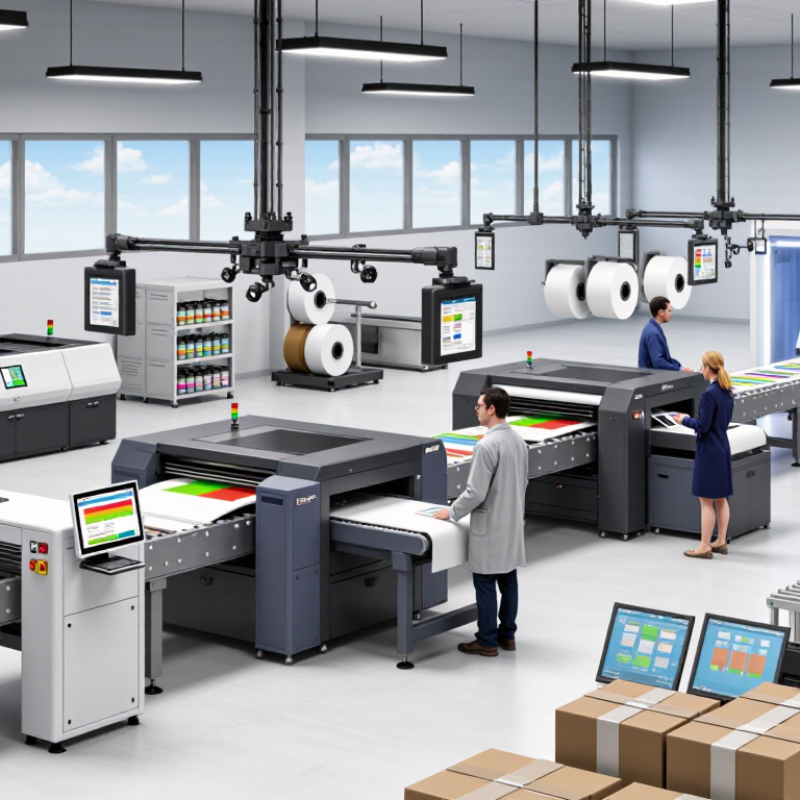
What Are the Top Industrial Printing Trends in 2026?

Industrial Printing: Core Processes and the 2026 Landscape

Industrial printing in 2026 is less about finding one winning process and more about matching the method to the job. Flexography suits repeat packaging runs, while offset printing delivers consistent detail on flat materials. Screen printing lays down durable, opaque layers, and inkjet handles short runs or changing designs with less setup. Thermal transfer is useful for crisp codes and labels. Material, finish, and production volume all matter.

Tips: Test the actual substrate, not just a paper sample. Check ink adhesion after drying, handling, and exposure to heat or moisture. A quick test can reveal problems before a full production run.

The 2026 landscape is shaped by tighter production schedules, variable data, and pressure to reduce waste. Digital workflows can shorten changeovers, but they do not make every job cheaper. Ink compatibility, curing time, and maintenance still affect output. Connected equipment can improve tracking, though poor setup may simply create more data to review. Sustainability also requires careful measurement: less waste is useful, but durability and energy use count too. The best choice is often less elegant than a sales chart suggests. Production is messier.

How Automation and AI Are Transforming Print Production

What Are the Top Industrial Printing Trends in 2026?

How Automation and AI Are Transforming Print Production

Automation is changing industrial print production from job setup to final inspection. Connected presses can share data with finishing equipment, reducing manual entry and helping teams spot bottlenecks sooner. AI systems can flag color drift, registration errors, or unusual machine vibration before a full run is wasted. Operators still make the critical decisions. The software offers signals, not certainty. That distinction matters.

Tips: Start with one repeatable task, such as checking registration or scheduling jobs. Compare system alerts with operator observations. Keep a record of false alarms, too; they reveal where settings need adjustment.

AI-assisted scheduling can balance deadlines, material availability, and machine capacity, while automated inspection helps maintain consistent output across long runs. But production floors are rarely tidy datasets. A substrate change, worn component, or rushed setup may confuse a model. Human review remains essential, especially when a defect is subtle or the job is unusual. Start small. Track setup time, waste, and rework before expanding automation. Better data helps, but it cannot fix a poorly defined process.

The Growth of Digital, Hybrid, and On-Demand Printing

Industrial printing is shifting toward smaller runs, faster changeovers, and more responsive production. Digital presses make short jobs practical, especially when artwork changes often or deadlines are tight. A packaging team, for example, can print a limited batch of labels without storing boxes of outdated stock. That matters. Setup can be quicker, though speed still depends on file preparation, finishing, and operator skill.

Hybrid systems combine digital and conventional processes to balance flexibility with established production strengths. A plant might digitally print variable graphics, then use conventional equipment for coatings or high-volume finishing. The result can suit jobs with both customization and consistent physical requirements. It is not automatic. Registration, color matching, and handoffs between machines need careful control, and a hybrid line may add complexity before it saves time.

On-demand production also changes how printers plan inventory. Instead of printing every forecasted version months ahead, teams can produce batches closer to actual orders. This may reduce obsolete materials and free warehouse space. Yet frequent small jobs can create more scheduling work, and the environmental benefit depends on materials, energy use, and delivery distance. I would not treat “print only what is needed” as a complete sustainability measure. Tracking waste, reprints, and machine downtime gives a more honest picture of whether the workflow is improving.

Sustainable Inks, Materials, and Resource-Efficient Workflows

Industrial printing in 2026 is moving toward lower-impact inks, recyclable substrates, and tighter control of energy and material use. Water-based and low-migration ink systems can reduce certain emissions or support packaging requirements, but performance depends on the job, substrate, and curing process. “Greener” is not automatic. A switch that increases rejects may erase some gains. The US Environmental Protection Agency reported a 68.2% recycling rate for paper and paperboard in 2018. That figure covers municipal waste, not printing stock alone, but it underscores why clean, sortable offcuts matter. Ask suppliers for material specifications and verify ink compatibility before changing a production line.

Tips: Track ink use, rejected sheets, and energy per finished unit—not just total output. The US Department of Energy’s compressed-air guidance says leaks can waste 20–30% of compressor output. Check hose fittings during routine maintenance; a small hiss can signal a persistent loss. Record the baseline before upgrades. It may be messy at first, and the data may expose inconvenient habits.

Resource-efficient workflows also mean planning jobs to reduce setup waste, batching compatible runs, and maintaining curing equipment. Test changes on a short run, then compare waste and quality under real conditions. One limitation: reported savings can vary with machine age, workload, and local material recovery. Treat supplier claims as a starting point, not proof; keep your own measurements.

Industrial Applications and Adoption Factors in 2026

In 2026, industrial printing is expanding where products need clear identification, durable graphics, or short-run customization. Packaging lines use digital systems to change codes and designs with less setup. Electronics manufacturers print fine patterns and labels; building-product makers add graphics directly to panels, tiles, and flooring. The applications differ, but each depends on repeatable quality.

Adoption is rarely driven by print speed alone. Plant managers weigh ink or material costs, equipment uptime, cleaning needs, and compatibility with existing production software. A system that prints well in a demonstration may struggle with a textured surface or a warm, dusty production floor. Small pilot runs can reveal those problems before a full installation. They also give operators time to learn calibration and maintenance. Not glamorous, but essential.

Traceability and reduced waste are meaningful factors, especially when every package or component needs a readable identifier. Automated inspection can flag smudged marks before products leave the line, though poor lighting or inconsistent substrates can still confuse sensors. Sustainability goals may also favor processes that limit setup waste, but the real gains depend on the complete workflow—not a single machine. One awkward detail remains: teams sometimes underestimate staff training. A thoughtful investment plan should account for people as well as print equipment.

FAQS

How is AI changing industrial print production?

AI can flag color drift, registration errors, and unusual machine vibration. Operators still need to judge each alert. It is not certainty.

Where should a print shop start with automation?

Begin with one repeatable task, such as checking registration or scheduling jobs. Compare alerts with operator notes. Keep false alarms, too.

Can automated scheduling reduce production delays?

It can balance deadlines, materials, and machine capacity. Substrate changes or rushed setups may still disrupt the plan. Track setup time and rework.

Why are digital presses useful for short runs?

They can make small batches practical when artwork changes often. For example, a team may print fewer labels and avoid storing outdated versions. File preparation still takes care.

What does hybrid printing combine?

Hybrid systems pair digital printing with conventional processes. A plant might add variable graphics digitally, then apply coatings on established equipment. Machine handoffs need attention.

Does on-demand printing always reduce waste?

Not necessarily. Smaller batches may reduce obsolete stock, but frequent changeovers can add scheduling work. Measure reprints, waste, and downtime.

Which materials and inks can support lower-impact printing?

Water-based inks and recyclable substrates may help, depending on the job and curing process. Test compatibility on a short run. “Greener” is not automatic.

How can teams measure resource efficiency?

Track ink use, rejected sheets, and energy per finished unit. Check hose fittings for small air leaks. The data may be messy at first.

Conclusion

Industrial printing in 2026 brings together established processes such as screen, flexographic, and offset printing with newer digital and hybrid approaches. Automation and AI are helping production teams prepare jobs, monitor quality, reduce setup time, and respond more quickly to changing order requirements. These tools can support consistent results while allowing workers to focus on oversight and specialized tasks. For businesses asking what are the latest trends in industrial printing technology, the shift toward connected, adaptable production is a central theme.

Digital and on-demand printing are expanding options for shorter runs, customized output, and faster turnaround, while hybrid workflows combine digital flexibility with the efficiency of conventional methods. Sustainability is also shaping investment decisions, with growing attention to lower-impact inks, recyclable or responsibly sourced materials, and workflows that use less energy and generate less waste. Adoption depends on factors such as production volume, print quality, cost, equipment compatibility, and workforce readiness. Across packaging, manufacturing, and other industrial applications, the strongest approach is one that balances productivity, flexibility, and resource efficiency.

Liam

Liam

Liam is a dedicated marketing professional with a profound expertise in the industry, where he excels at highlighting the unique advantages of our core products. With a keen understanding of market trends and consumer needs, Liam frequently updates our company’s professional blog, providing......