When exploring printing technologies, one might wonder, "what is the difference between UV printing and inkjet printing?" Both methods are widely used in various industries, yet they have distinct characteristics. Understanding these differences can help businesses make informed decisions for their printing needs.
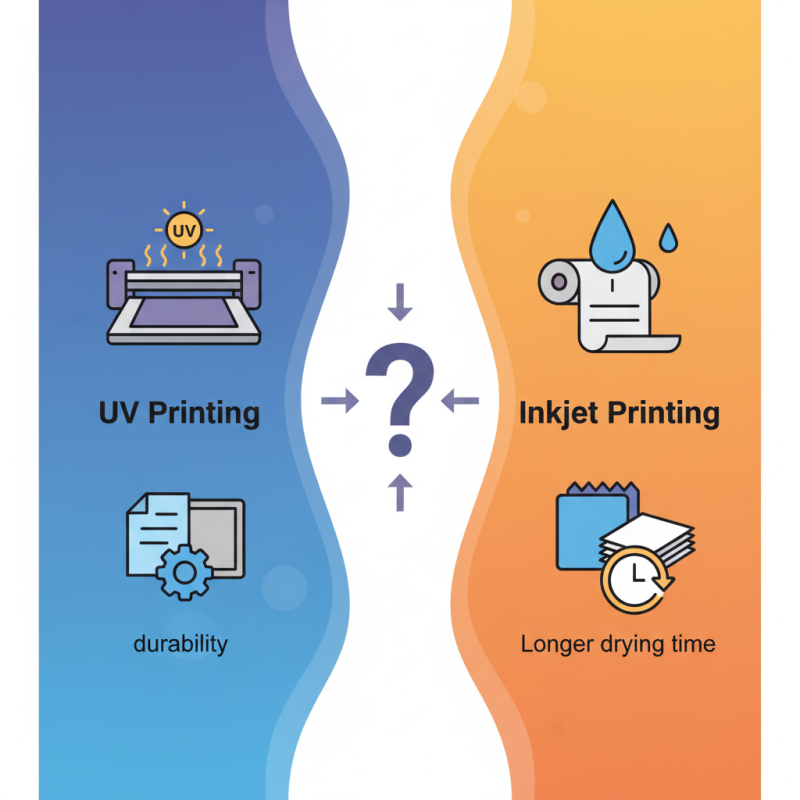
UV printing employs ultraviolet light to cure or dry the ink as it is printed, resulting in vibrant colors and sharp details. It works well on diverse surfaces, including plastics and metals. Inkjet printing, on the other hand, uses liquid ink that is sprayed onto the substrate. This method is generally more versatile for various media but may require longer drying times.
Each printing method has its pros and cons. For instance, UV printing can be more expensive and requires specialized equipment. However, it offers durability that inkjet often lacks. Conversely, inkjet printing is usually more accessible and cost-effective but may fade faster. A thorough understanding of these aspects can enhance the quality of your projects and help you reflect on your printing strategy.
Understanding the Basics of UV Printing
UV printing is a powerful technique gaining popularity in various industries. Unlike traditional inkjet printing, UV printing uses ultraviolet light to cure ink as it is applied. This process creates vibrant colors and sharp details. The prints are immediately dry, allowing for quick handling and reducing smudging risks.
Tips for choosing UV printing: consider the material you will print on. UV printing works well on a range of substrates, including plastics, metal, and glass. However, not all materials are ideal for this process. Test samples before committing to large runs. Another tip is to evaluate the finish options. UV prints can have a glossy or matte finish, impacting the final appearance.
While UV printing offers benefits, it’s important to consider its limitations. UV inks can be more expensive than traditional inks. Also, certain colors may not achieve the expected depth. Always communicate with your printer to ensure the best results. Understanding these aspects of UV printing allows you to make informed decisions and enhance your projects.
How to Understand the Difference Between UV Printing and Inkjet Printing?
| Feature |
UV Printing |
Inkjet Printing |
| Drying Method |
UV light curing |
Evaporation of solvent |
| Material Compatibility |
Variety (plastic, metal, wood) |
Paper, canvas, textiles |
| Print Quality |
High resolution |
Good but can vary |
| Speed |
Fast drying, quicker turnaround |
Slower drying time |
| Color Vibrancy |
Bright and vivid |
Variable, depending on ink |
| Environmental Impact |
Lower VOC emissions |
Higher VOC emissions |
Key Features of UV Printing Technology
UV printing technology offers several key features that distinguish it from traditional inkjet printing. One primary advantage is the
instant curing process. With UV printing, the ink is cured using ultraviolet light immediately after it is printed. This leads to
vibrant colors and sharp details. The immediate drying
minimizes the risk of smudging and allows for quick handling of printed materials.
Another important aspect is the versatility in material use. UV printing can be applied to a variety of surfaces, including non-porous
materials like metal, glass, and plastics. This expands the use cases for businesses looking to create customized products. However,
the initial cost of UV printing equipment can be a barrier for some. It's essential to weigh the long-term benefits against upfront costs.
Additionally, UV inks are typically more environmentally friendly. They contain fewer volatile organic compounds (VOCs) compared to
solvent-based inks. However, some may argue that this eco-friendliness comes at the expense of certain color nuances. As with any technology, it's vital to consider trade-offs
and conduct thorough research to determine the best fit for your printing needs.
Exploring Inkjet Printing: Principles and Applications
Inkjet printing is a widely used technology that converts digital images into physical prints. It works by spraying tiny droplets of liquid ink onto various surfaces. This method allows for high-resolution images and fine details. One key aspect of inkjet printing is its versatility. It can handle different media, including paper, canvas, and even fabric. This flexibility makes it popular for both personal and commercial uses.
When considering inkjet printing, it's important to keep a few tips in mind. Choose the right ink for your project. Different inks yield varied results in color vibrancy and longevity. Be aware of the type of paper or material you're using. Not all surfaces work well with inkjet prints. Test your settings before committing to a large print job.
Inkjet printers can struggle with certain challenges. Occasionally, colors may not match exactly what you see on screens. Understanding color profiles can help mitigate this issue. Print head clogs can occur if the printer isn't used regularly. Regular maintenance is vital for optimal performance. Keeping these points in mind can enhance your inkjet printing experience.
Comparative Analysis of UV and Inkjet Printing Techniques
Understanding the differences between UV printing and inkjet printing is crucial for making informed decisions. UV printing utilizes ultraviolet light to cure ink instantly. In contrast, inkjet printing applies tiny droplets of ink onto surfaces, allowing for more gradual drying. According to industry reports, the UV printing market is expected to exceed $15 billion by 2026, showcasing rapid growth.
Inkjet printing is often praised for its versatility. It works effectively on various materials, including paper and textiles. A report by Smithers Pira indicates that inkjet printing will experience a compound annual growth rate of 6.5% through 2024. This method excels in producing complex color gradients. However, it may struggle to achieve the same durability as UV prints in outdoor settings.
While UV printing offers vibrant colors and resistance to scratches, it can lead to a higher initial cost. This might deter some businesses looking for budget-friendly options. Both techniques have their merits and drawbacks. Understanding these nuances is essential for choosing the right printing method based on specific project needs.
Comparison of UV Printing vs. Inkjet Printing
Choosing the Right Printing Method for Your Project
Choosing the right printing method for your project involves understanding various factors, notably quality and application.
UV printing utilizes ultraviolet light to cure ink instantly. This method produces vibrant colors and sharp details, making it suitable for items like banners and signage. A 2022 report by Smithers states that UV printing can achieve a speed of 200 square meters per hour, optimizing production time.
On the other hand, inkjet printing is versatile and widely used for a range of media. However, it may not always match the durability of UV prints. Some studies indicate that inkjet prints can fade over time, particularly when exposed to UV light. This can affect projects that require longevity. Evaluating the lifespan of your prints is crucial, especially for outdoor applications.
Both methods have their strengths and limitations. UV printing excels in speed and color saturation. Inkjet printing offers flexibility in material usage. Projects demanding immediate results may benefit from UV printing. However, those that require detailed gradients may find their answer in inkjet options.
In the end, the choice can significantly shape your project’s outcome.
FAQS
: UV printing is a technique that uses ultraviolet light to cure ink instantly.
It produces vibrant colors and sharp details. Prints dry immediately and reduce smudging risks.
UV printing works well on plastics, metals, and glass. However, test samples before large runs.
UV prints can have a glossy or matte finish. The choice impacts the final appearance significantly.
Yes, UV inks can be more expensive. Certain colors may not achieve expected depth as well.
UV printing cures ink instantly, while inkjet allows gradual drying. Each method has its own strengths.
Higher initial costs might deter budget-conscious businesses. It's a factor to consider.
Clear communication ensures the best results and helps manage expectations regarding the printing process.
UV prints generally offer more durability outdoors, while inkjet prints may struggle in harsh conditions.
Yes, the market is expected to exceed $15 billion by 2026, indicating rapid growth and interest.
Conclusion
This article delves into what is the difference between UV printing and inkjet printing, focusing on their fundamental principles and applications. UV printing utilizes ultraviolet light to cure the ink as it is printed, resulting in vibrant colors and a faster drying process. Key features of this technology include its ability to print on a variety of substrates and its environmentally friendly attributes due to reduced VOC emissions. In contrast, inkjet printing sprays tiny droplets of ink onto surfaces, making it versatile for various applications but often slower in drying compared to UV methods.
The comparative analysis highlights the strengths and weaknesses of both technologies, guiding readers in choosing the appropriate printing method for their specific projects. Ultimately, understanding these distinctions aids in making informed decisions based on project needs, material compatibility, and desired outcomes.

 Axis Print