10 Best Ways to Improve Production Efficiency in Printing?

Time:2026-10-14 Author:Sienna
0%

Improving print performance is no longer limited to buying faster presses. It depends on controlling every minute, sheet, roll, and rework event across the production floor. The question is practical: how to improve production efficiency in printing lines while protecting quality, margins, and delivery promises?

Industry data shows why this matters. The 2024 drupa Global Trends report identifies rising costs, skilled-labor shortages, and sustainability demands as major pressures on printing companies. These pressures make avoidable downtime especially expensive. A press waiting for plates, an operator searching for ink, or a finishing unit receiving incorrect settings can quietly reduce daily output. Small losses compound. Smithers’ market research on digital print also shows continued growth in automated, variable, and short-run production, where fast changeovers and reliable workflow integration are essential.

This guide presents ten practical methods for improving production efficiency, from preventive maintenance and job scheduling to color control, operator training, and real-time performance tracking. The recommendations reflect common practices used by experienced print managers and production engineers. They also recognize an uncomfortable reality: efficiency projects often fail because teams measure speed but ignore waste, rework, and employee fatigue. More automation is not always better. Poorly configured software can create new delays.

Reliable improvement begins with evidence. Measure overall equipment effectiveness, setup time, spoilage, unplanned stops, and order-release accuracy. Then test one change on a real production line. Review the result honestly. A faster press is useful only when the complete workflow becomes faster.
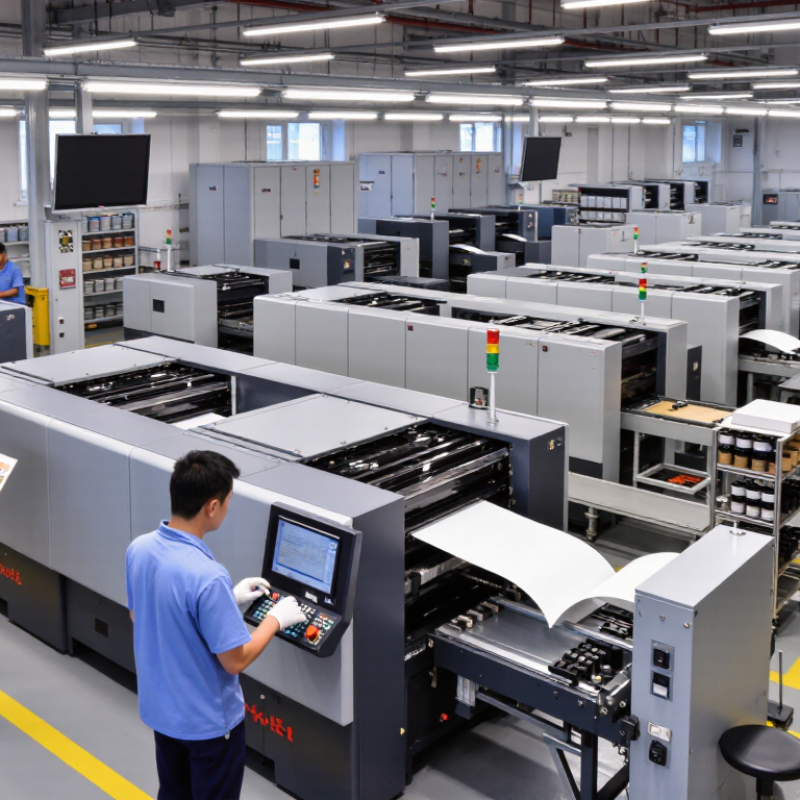
10 Best Ways to Improve Production Efficiency in Printing?

Assess Current Printing Workflow and Identify Efficiency Gaps

Before improving production efficiency, map the existing printing workflow from file receipt to packed cartons. Record timestamps at preflight, proofing, plate preparation, press setup, drying, finishing, and dispatch. Walk the floor. During one audit, I found operators waiting beside a press for an approved file. The press was available, but production stopped for 27 minutes. That delay appeared as a machine problem in the weekly report.

Compare planned and actual run times for each job. Track setup minutes, substrate waste, reprints, stoppages, and approval delays. Separate recurring losses from unusual events. A jam may be random, while repeated color adjustments can reveal weak calibration or unclear standards. Ask operators where work queues form, because spreadsheets rarely show every interruption. Their notes may expose informal checks that prevent larger defects. Small details matter.

Review the findings with production, prepress, and finishing staff together. Use a gap log listing the issue, evidence, owner, and impact. Set a baseline before changing settings. Otherwise, a faster shift may only hide higher waste. I also question my measurements when urgent jobs distort the average. Median times and job categories provide a fairer comparison. Leave room for judgment. Not every delay deserves automation. Recheck the workflow after a normal week, not only after an unusually smooth run.

Standardize Prepress Processes and Automate Repetitive Tasks

Standardizing prepress work is one of the most practical ways to improve printing efficiency. In production audits, I often find delays before the file reaches the press. Designers use different bleed settings, color profiles, and naming habits. A shared preflight checklist removes these small interruptions. It should define trim size, image resolution, spot colors, overprint settings, and proof requirements. The 2024 drupa Global Trends report identified workflow automation as a major investment priority for print companies. That priority makes sense. A missing font can waste more time than a complex press adjustment.

Automation should handle repetitive checks, not replace professional judgment. Preflight software can flag low-resolution images, incorrect page sizes, and unintended RGB elements within seconds. Automated imposition can also reduce manual layout decisions for standard jobs. A 2023 industry survey by Printing Industries reported that many printers continued investing in digital workflow and automation despite economic pressure. However, our first automation project produced too many false warnings. Operators began ignoring alerts. We had to simplify the rules and review them weekly. That failure was useful. Every automated rule needs an owner, a documented reason, and a measured result. Track file-repair time, remake rates, approval delays, and prepress hours per job. The 2024 World Press Trends data also showed continuing pressure on margins, making preventable rework increasingly expensive. A clean template library, controlled PDF settings, and short operator training sessions can turn prepress into a predictable production stage.

Optimize Equipment Performance Through Preventive Maintenance

Preventive maintenance is a practical way to improve production efficiency in printing. A press that runs smoothly wastes less paper, ink, and operator time. Small issues often appear first as uneven colour, longer makeready, or repeated paper jams. Technicians should inspect rollers, blankets, bearings, sensors, and drying systems on a fixed schedule. Record readings, not just completed tasks. Vibration, temperature, and pressure trends can reveal trouble before a breakdown stops production.

The U.S. Department of Energy’s Operations and Maintenance Best Practices Guide reports that preventive maintenance can reduce costs by 12–18% compared with reactive maintenance. Deloitte’s 2020 Global Cost Survey also links predictive maintenance with lower downtime and improved asset productivity. These figures are useful, but printing conditions vary. A small shop should not copy a large factory’s schedule blindly. That approach can waste labour. Maintenance intervals should reflect run length, substrate dust, humidity, and equipment age. A perfect plan is unlikely.

Tips: Clean ink paths after demanding runs. Check nip pressure at the start of each shift. Replace worn parts before failure, but avoid replacing parts only because a calendar says so. Use a simple maintenance log with date, machine hours, fault symptoms, and corrective action. Review it weekly with operators and technicians. Their practical observations may expose problems that sensors miss. Calibration records also matter. An inaccurate sensor can create false confidence and delay a necessary repair.

10 Best Ways to Improve Production Efficiency in Printing? - Optimize Equipment Performance Through Preventive Maintenance

No. Preventive Maintenance Method Key Activities Recommended Frequency Primary KPI Practical Performance Target Expected Efficiency Benefit
1 Use a scheduled maintenance calendar Convert manufacturer service intervals and operating-hour records into planned daily, weekly, monthly, and annual tasks. Review weekly; execute according to operating hours Planned maintenance compliance At least 90% of scheduled tasks completed on time Fewer unexpected stoppages and better maintenance resource planning
2 Inspect and clean critical rollers Remove ink, paper dust, adhesive, and coating residue; check roller surfaces, pressure, alignment, and wear. Visual check each shift; detailed cleaning weekly Start-up waste and print defects Keep start-up waste below 3% of the job quantity More consistent ink transfer, registration, and color density
3 Maintain lubrication points Lubricate bearings, chains, gears, and other approved points using the correct lubricant and quantity. Inspect weekly; lubricate according to service requirements Bearing and drive-related downtime No missed lubrication tasks; record every service event Reduced friction, overheating, vibration, and component wear
4 Calibrate sensors and registration systems Verify web sensors, sheet detectors, temperature sensors, pressure gauges, and front-to-back registration. Monthly and after major repairs or format changes Registration error Keep registration within the process tolerance specified for the job Less misregistration, rework, and quality-related downtime
5 Monitor temperature and vibration Record readings from motors, gearboxes, compressors, pumps, and drying units; investigate abnormal trends. Monthly; more frequently on high-load equipment Abnormal-condition alerts 100% of critical assets included in condition checks Early detection of bearing, alignment, and drive problems
6 Replace consumable parts before failure Track blankets, filters, belts, blades, grippers, seals, nozzles, and other wear parts by usage and condition. Inspect each shift or weekly; replace at defined limits Breakdowns caused by wear parts Zero overdue replacements for safety- or quality-critical parts Stable machine output and fewer emergency changeovers
7 Control compressed air and vacuum systems Check leaks, filters, regulators, hoses, vacuum levels, and pressure stability at operating points. Leak inspection monthly; filter service per condition Pressure stability and pneumatic downtime Maintain pressure within the equipment operating specification Improved paper feeding, drying, cleaning, and actuator reliability
8 Standardize changeover inspections Use a checklist for tooling, plates, blankets, ink circuits, paper path, settings, guards, and test sheets. At every job changeover Average changeover time Reduce changeover variation and keep tasks completed consistently Shorter setup times and fewer start-up interruptions
9 Track OEE and downtime causes Measure availability, performance, and quality; classify downtime using consistent reason codes. Record every shift; review weekly Overall Equipment Effectiveness (OEE) Establish a baseline and improve the largest loss category first Turns maintenance data into measurable improvement actions
10 Maintain spare-parts and service records Keep minimum stock levels, part specifications, repair history, inspection results, and approved procedures. Update after each service; audit monthly Mean Time to Repair (MTTR) Reduce repair delays caused by missing parts or information Faster troubleshooting, shorter repairs, and improved equipment availability

Note: Performance targets should be adjusted to the press type, substrate, ink system, job complexity, operating hours, and equipment manufacturer’s specifications.

Improve Material Management, Scheduling, and Production Coordination

10 Best Ways to Improve Production Efficiency in Printing?

Efficient printing starts with visible material control. Store paper, ink, plates, and packaging supplies by job and production date. Label each pallet clearly, including quantity, size, and moisture requirements. A daily stock check prevents small shortages from stopping a press. Keep safety stock for critical materials, but avoid filling the warehouse with slow-moving items. This balance requires regular review.

Scheduling should reflect actual machine capacity, not ideal estimates. Group jobs by paper size, ink configuration, and finishing method to reduce setup time. Leave realistic gaps for cleaning, maintenance, and quality checks. A shared production board helps operators, planners, and warehouse staff see changes immediately. Keep it simple. When urgent orders arrive, record the reason for every schedule change. These records reveal recurring planning weaknesses.

Production coordination improves when responsibilities are specific. The press operator should confirm approved files, materials, and target quantities before starting. Quality staff can inspect the first sheets and record color, alignment, and surface defects. Warehouse teams should prepare the next job before the current run ends. We once treated preparation as obvious and lost time searching for the correct packaging. That mistake showed the value of written handoffs. Digital records can help, but they still need human verification. A rushed update may create more confusion than a careful paper checklist. Review delays weekly and adjust standards when real production data proves them unrealistic.

10 Best Ways to Improve Production Efficiency in Printing

Improve material management, scheduling, and production coordination

This benchmark compares common printing-production KPIs before and after applying structured material control, production scheduling, preventive maintenance, workflow standardization, and cross-department coordination. Higher values indicate better performance, except for material waste and changeover time.

Measure Results with Quality, Waste, and Productivity Metrics

Improving printing efficiency starts with measurement, not faster machines. A production manager should track quality, waste, and productivity on every shift. Record first-pass yield, rework sheets, setup waste, hourly output, and downtime minutes. Use the same definitions across operators and shifts. Otherwise, the numbers become persuasive but unreliable. Keep it simple.

For quality, monitor first-pass yield and customer complaints by job type. A falling yield often reveals ink balance, registration, drying, or file-preparation problems. Waste metrics should separate startup sheets, trim loss, rejected prints, and excess materials. One useful measure is waste percentage: discarded material divided by total material issued. Compare similar jobs, not a short run with a complex, color-critical project. Context matters.

Productivity needs more than sheets per hour. Measure productive hours against scheduled hours, then review setup and changeover time. For example, 18,000 acceptable sheets from a 10-hour shift means 1,800 good sheets hourly. That figure is meaningful only when defects and downtime are recorded beside it. Weekly reviews can expose patterns, such as Monday setup delays or recurring finishing errors. Still, metrics can mislead. A team may reduce waste by slowing production, while hidden overtime increases. Discuss the numbers with operators, verify samples, and adjust targets when evidence changes.

FAQS

How does preventive maintenance improve printing efficiency?

It reduces unexpected stoppages, paper waste, ink waste, and lost operator time. Smooth rollers and bearings support steadier production. Small warning signs matter.

Which equipment parts should technicians inspect regularly?

Inspect rollers, blankets, bearings, sensors, and drying systems. Check nip pressure at every shift start. Record vibration, temperature, and pressure readings.

How should maintenance intervals be decided?

Use run length, substrate dust, humidity, equipment age, and machine workload. A small shop should not copy a large factory’s schedule. Perfect timing is unlikely.

What should a practical maintenance log contain?

Record the date, machine hours, symptoms, readings, and corrective action. Include calibration details for sensors. A simple notebook can work.

When should worn parts be replaced?

Replace parts when inspections show wear or failure risk. Do not replace them only because a calendar date arrived. That can waste money.

Which production metrics should printing teams track?

Track first-pass yield, rework sheets, setup waste, hourly output, and downtime minutes. Use identical definitions across shifts. Otherwise, the numbers may deceive.

How can a team calculate useful printing productivity?

Divide acceptable sheets by productive hours, while recording defects and downtime. For example, 18,000 good sheets over ten hours equals 1,800 hourly sheets. Context still matters.

How can teams avoid misleading efficiency results?

Compare similar jobs and separate startup sheets, trim loss, rejected prints, and excess materials. Review samples with operators. Faster output may hide overtime or quality problems.

Conclusion

Improving production efficiency in printing lines begins with a clear understanding of the current workflow. By mapping each stage from prepress to finishing, printing teams can identify delays, repeated work, communication gaps, and sources of waste. Standardizing file preparation, approval procedures, and color-management practices helps create consistent results, while automation can reduce manual effort in repetitive tasks. Regular preventive maintenance is also essential for keeping equipment reliable, minimizing unexpected downtime, and maintaining stable print quality.

Effective production coordination further depends on accurate material management, realistic scheduling, and clear communication between departments. Paper, ink, and other supplies should be monitored to prevent shortages and excess inventory, while production plans should reflect machine capacity and job priorities. To understand how to improve production efficiency in printing lines, companies should track measurable indicators such as output, setup time, rework, waste, delivery performance, and quality results. Reviewing these metrics regularly supports practical improvements and long-term operational growth.

Sienna

Sienna

Sienna is a skilled marketing professional with a deep expertise in our company’s core products and services. With a passion for innovation and detail, she plays a pivotal role in crafting insightful blog posts that not only highlight the unique features of our offerings but also provide valuable......